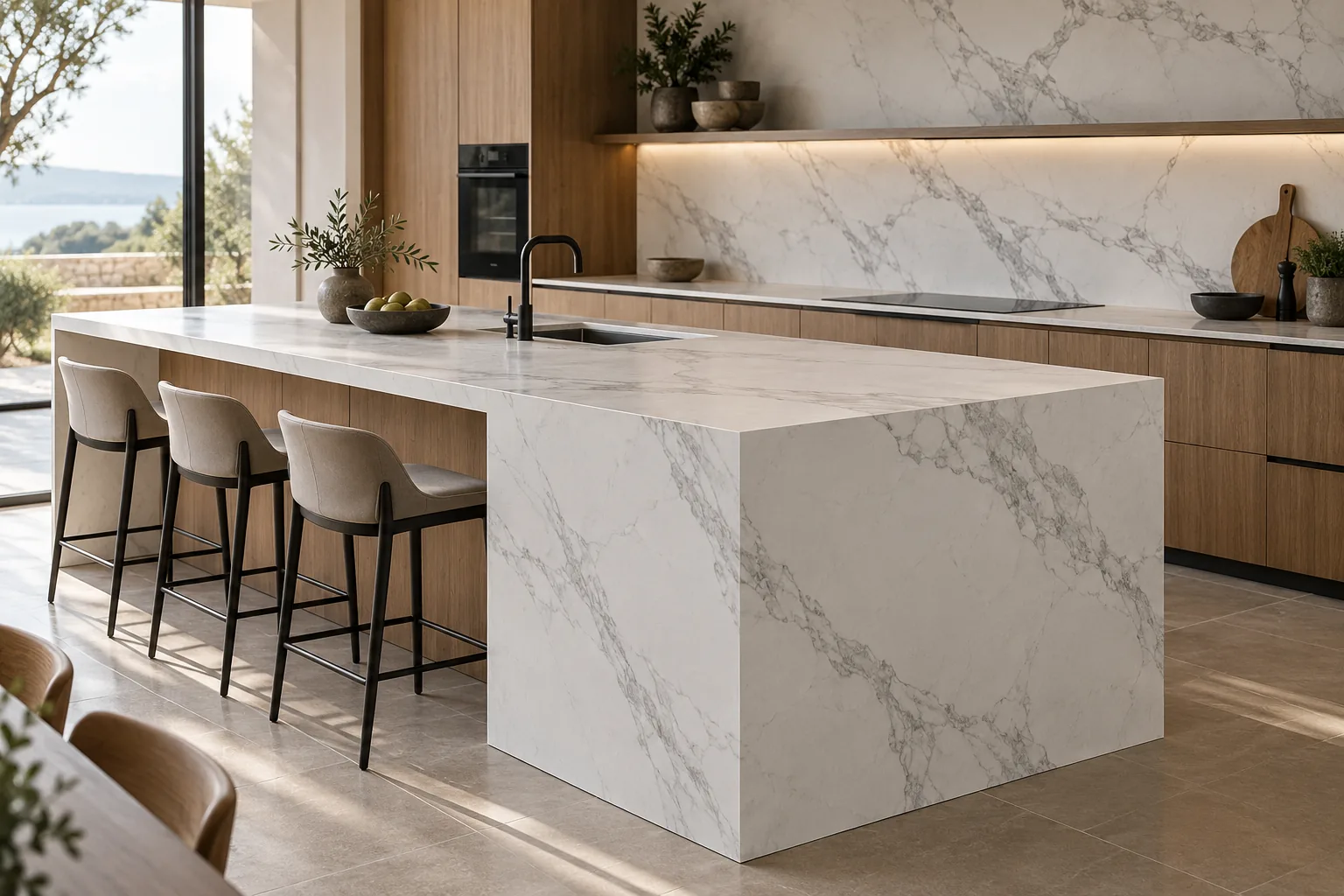
Wholesale buyers need more than a long list of colours. A useful range has a clear role for each design, a practical display plan and a way to quote repeat demand. Begin with your route to market: showroom sales, fabrication customers, retail partners or project supply. That choice helps determine which product information and samples your sales team needs first.
Range and model selectionSample approval and order termsReplenishment and batch discussion
GLOBALSLAB
Wholesale sourcing
01 / Planning notes
Define the collection you want to sell
Explain the market, customer type and applications you serve. Identify core looks, preferred sizes and any constraints around storage or local fabrication. A focused shortlist is more useful than an unspecified request for all products.
02 / Planning notes
Separate requirements by model
List the proposed quantity, size, finish and thickness for each model. If you want a mixed order, ask whether the combination is workable for the current supply conditions and packing plan.
03 / Planning notes
Approve the commercial scope
Confirm quoted products, sample references, minimum quantities, lead times, packaging, payment arrangements and delivery responsibilities in the order documents. Terms need to be agreed for your specific order.
FOR THE WAY YOU BUY
Different businesses.
Different starting points.
A distributor builds a range. A fabricator works to a drawing. A project buyer plans a programme. Tell us which brief is yours.
01
Importers & distributors
Build a commercially useful collection around local demand, preferred formats and a clear replenishment plan.
Build a sellable range before building a large order
01
Give each design a role in the collection
AI-generated design illustration; not a supplied product or completed project.
Separate core repeat designs from accent surfaces and project-led options. A small collection can offer quiet backgrounds, a darker contrast and one expressive focal design without multiplying every size and finish. Compare the intended sales role with the space available for samples and stock. Ask your team which combinations they can explain and quote confidently. This exercise creates a more useful first order than selecting many similar patterns without knowing how each will be presented to customers.
Label each model as core, accent or project-led.
Compare overlapping designs before adding more references.
02
Prepare the local sales reference set
AI-generated design illustration; not a supplied product or completed project.
A sample board, a full-piece photograph and a product sheet serve different sales questions. Decide which of these your customers need to see and how your local sales codes will link back to the factory model. If you request private labelling or translated packaging, provide the artwork, required fields and approval contact for a feasibility discussion. Do not assume that a colour name used in your showroom also identifies a factory model. Maintain a mapping so that enquiries, quotations and repeat requests can be traced to the same product.
Keep showroom names and factory model codes together.
Approve sample labels before distributing them to dealers.
03
Define a repeat-order conversation early
AI-generated design illustration; not a supplied product or completed project.
A first purchase does not establish permanent availability, fixed production timing or identical batches for every later order. Discuss how repeat demand will be reviewed, what product identification should be retained and how a discontinued or changed model would be handled. For mixed-material orders, keep slabs and tiles as separate line items even when they share a marketing colour name. Review the quantity unit, model combination and transport constraints for each purchase rather than applying the commercial conditions of the first order without checking.
Record the reorder reference and the quantity unit.
Discuss substitutions before a local customer commits.
DISTRIBUTOR RANGE DEVELOPMENT
Wholesale range worksheet
Wholesale range worksheet
Element
Design decision
Information to provide
Core range
Design role and preferred combination
Target buyer and stock plan
Sample set
What the dealer needs to demonstrate
Sample format and label artwork
Sales identity
Local code to factory model mapping
Reference table for quotations
Repeat demand
Forecast and change handling
Previous model and order references
Wholesale sourcing
Questions buyers ask
Should I request every design for my first range?+
A focused selection is easier to display, explain and reorder. Start with your target customers and fill distinct design roles before expanding similar options.
Can my own model names be used?+
Discuss the labelling requirements and feasibility, while retaining a clear mapping to the supplied factory model. A private name should not break traceability.
Are repeat orders automatically under the original terms?+
Confirm availability, quantity, current pricing and delivery conditions for each order. Keep the prior reference for identification, not as an unreviewed new commitment.
LET’S START A CONVERSATION
Your next project
starts with a surface.
Tell us what you are sourcing. We will help turn your requirements into a clear product enquiry.