
WALLS & FLOORS · COORDINATED COLLECTIONS
Stone look · Porcelain tiles
Mineral effects give a tiled floor visual depth without relying on a single focal vein. The impression can range from calm and fine-grained to visibly varied. A useful selection compares a complete group of faces and how they work with the room proportions, rather than ranking individual tile photographs.

1 matching surfaces
No matching products. Try another search or look.
MATERIAL EDIT
Stone-look tile fields depend on variation and balance
Judge the blend before accepting the colour
A collection may combine lighter and darker faces. Decide how much tonal variation suits the room and inspect the blend across several pieces. A sample taken from the lightest tile will not explain the final field if stronger faces are part of the selected design.
- View light and dark faces together.
- Record the approved degree of visual variation.
Keep transitions as intentional as the main area
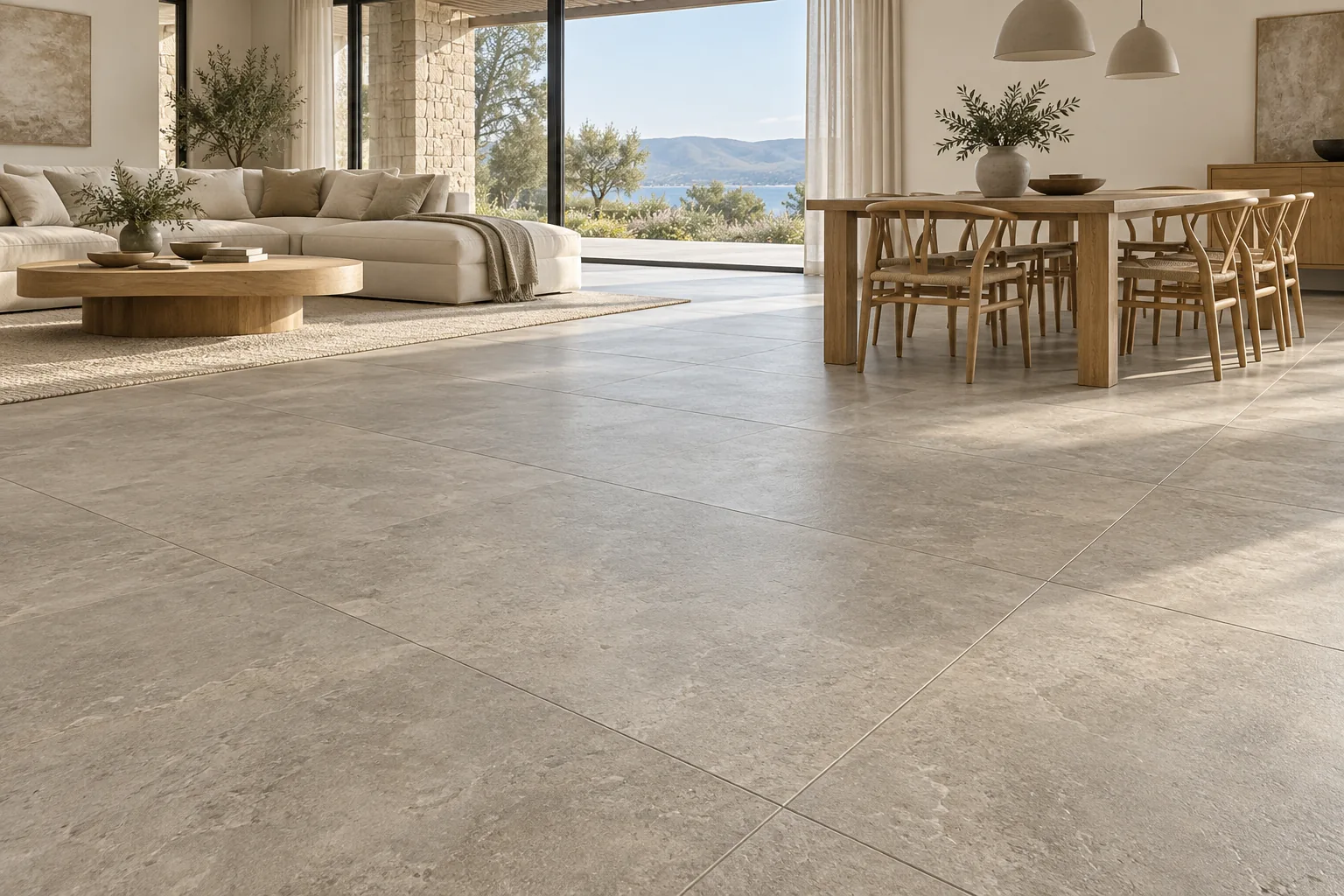
Stone-look tiles often meet timber, cabinetry or a different tile finish. Compare the undertones at those boundaries and draw where the tile grid ends. At a doorway, a deliberate transition can be more convincing than an unplanned narrow cut.
- Review boundaries beside actual adjoining samples.
- Show perimeter cuts and threshold positions.
Explain shade variation without confusing it with a different product
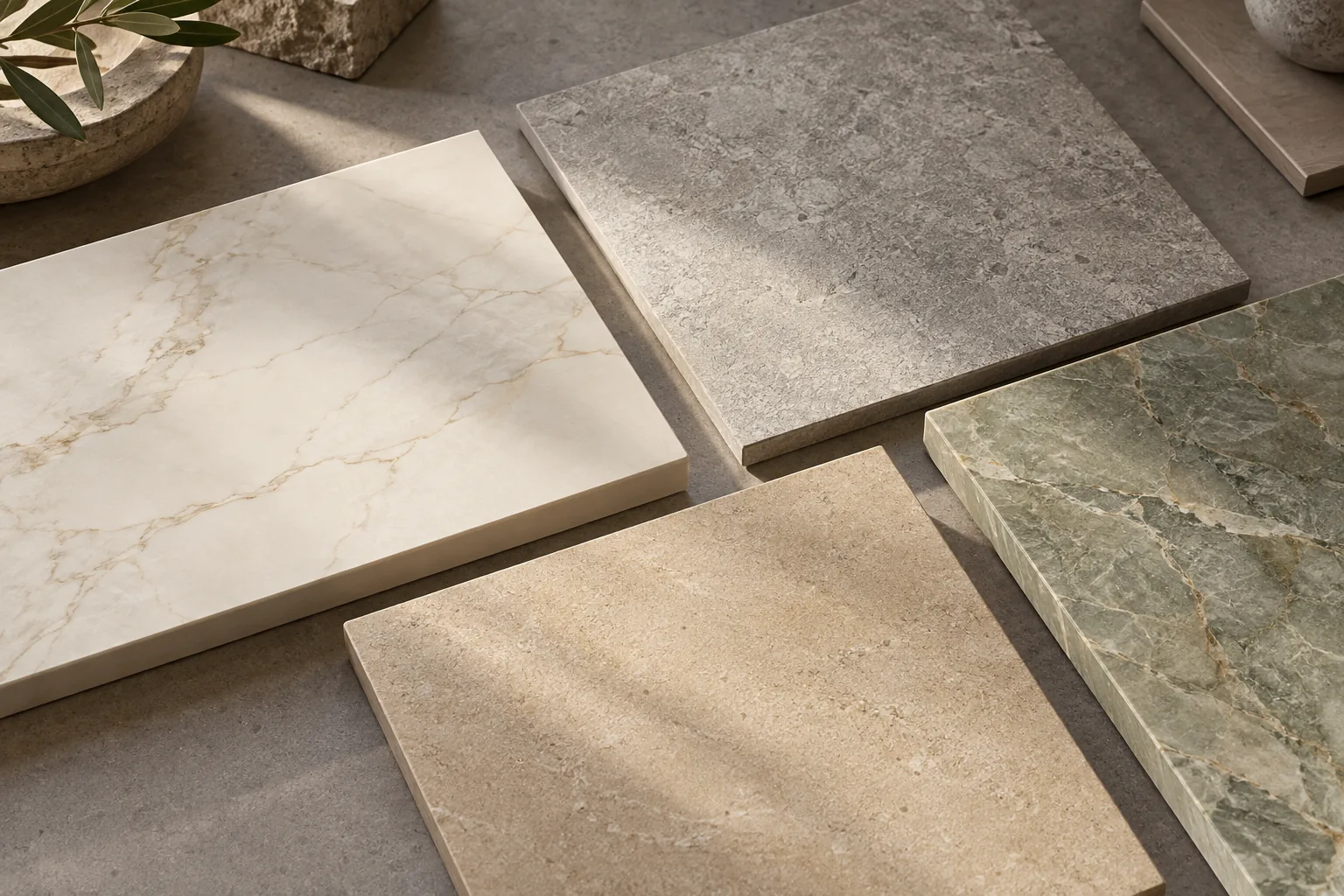
A buyer reviewing several stone-effect faces may interpret every lighter or darker piece as a separate colour. Build the selection record so it shows which differences belong within one reviewed design and which images refer to another model. Keep the sample identifiers legible and avoid mixing unrelated pieces on an unlabelled board. Where a broader range of appearance is intended, the buyer should see that range before approval rather than discovering it while unpacking. This record does not replace batch review, but it gives the sales, purchasing and installation teams a shared understanding of the visual variety they discussed and prevents a quiet single sample becoming the only remembered reference.
- Label variations within one model separately from alternative models.
- Retain the reviewed multi-face board with the selection record.
MATERIAL EDIT
Stone-look tile fields depend on variation and balance · Selection notes
| Decision | Review | Record |
|---|---|---|
| Tonal blend | Light and dark face distribution | Group photograph |
| Mineral scale | Density at normal viewing distance | Room-scale board |
| Transition | Grid ending and neighbouring tone | Threshold detail |
Stone look · Porcelain tiles
Questions buyers ask
Can I approve stone-look tiles from the lightest sample?
Only if the sample represents the appearance being supplied. Ask to see the wider face range before accepting a field that intentionally includes darker pieces.
Does a natural-stone appearance mean every tile is visually unique?
No. Printed face counts and repetition depend on the product. Review the actual face information and planned distribution for the chosen model.
LET’S START A CONVERSATION
Your next project
starts with a surface.
Tell us what you are sourcing. We will help turn your requirements into a clear product enquiry.