
WALLS & FLOORS · COORDINATED COLLECTIONS
Bookmatch planning · Porcelain tiles
A bookmatched tile composition uses specific pieces in a defined arrangement. It is different from rotating ordinary marble-look tiles until a similar shape appears. Establish the proposed picture, its finished boundaries and its numbering before treating the design as an orderable panel.

0 matching surfaces
No published models in this collection.
MATERIAL EDIT
Mirrored tile panels need a piece-by-piece map
Build the elevation around the actual sequence
Show every tile position, its orientation and the planned joint. Mark doors, niches and fittings directly on that grid. If one piece is cropped or shifted, the centre line can change even when the individual tiles are correct. Keep the approved map available to the installer.
- Label row, column and orientation.
- Overlay the full set of wall openings.
Account for breakage and future replacement at the design stage
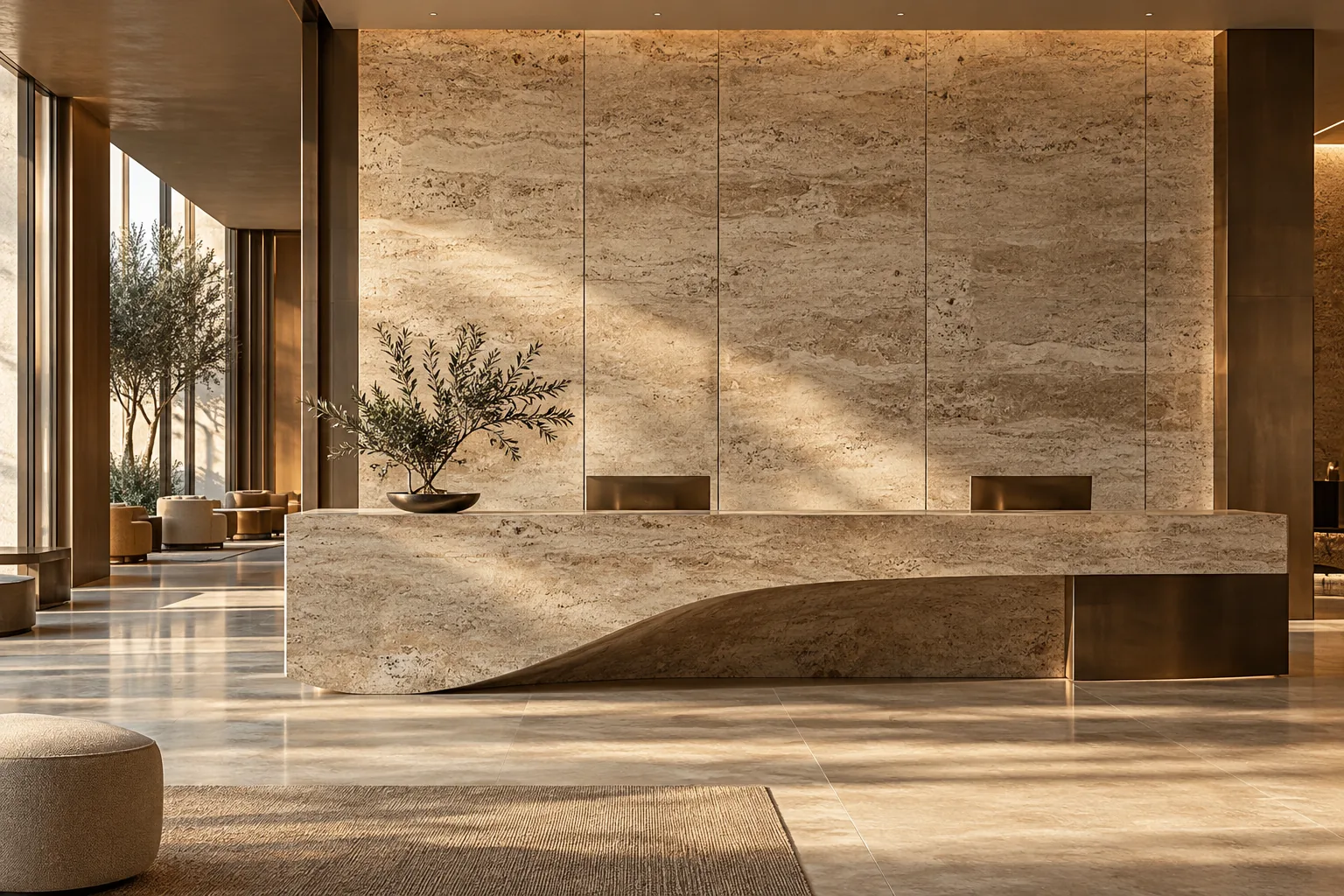
A sequenced decorative field may require a particular face at a particular location. An ordinary spare of the same colour is not necessarily an equivalent visual replacement. Ask how the selected pattern is identified and discuss which references need to be retained for later replacement enquiries.
- Retain the complete pattern map.
- Keep packaging references linked to piece positions.
Clarify whether the enquiry concerns a complete panel or individual pieces
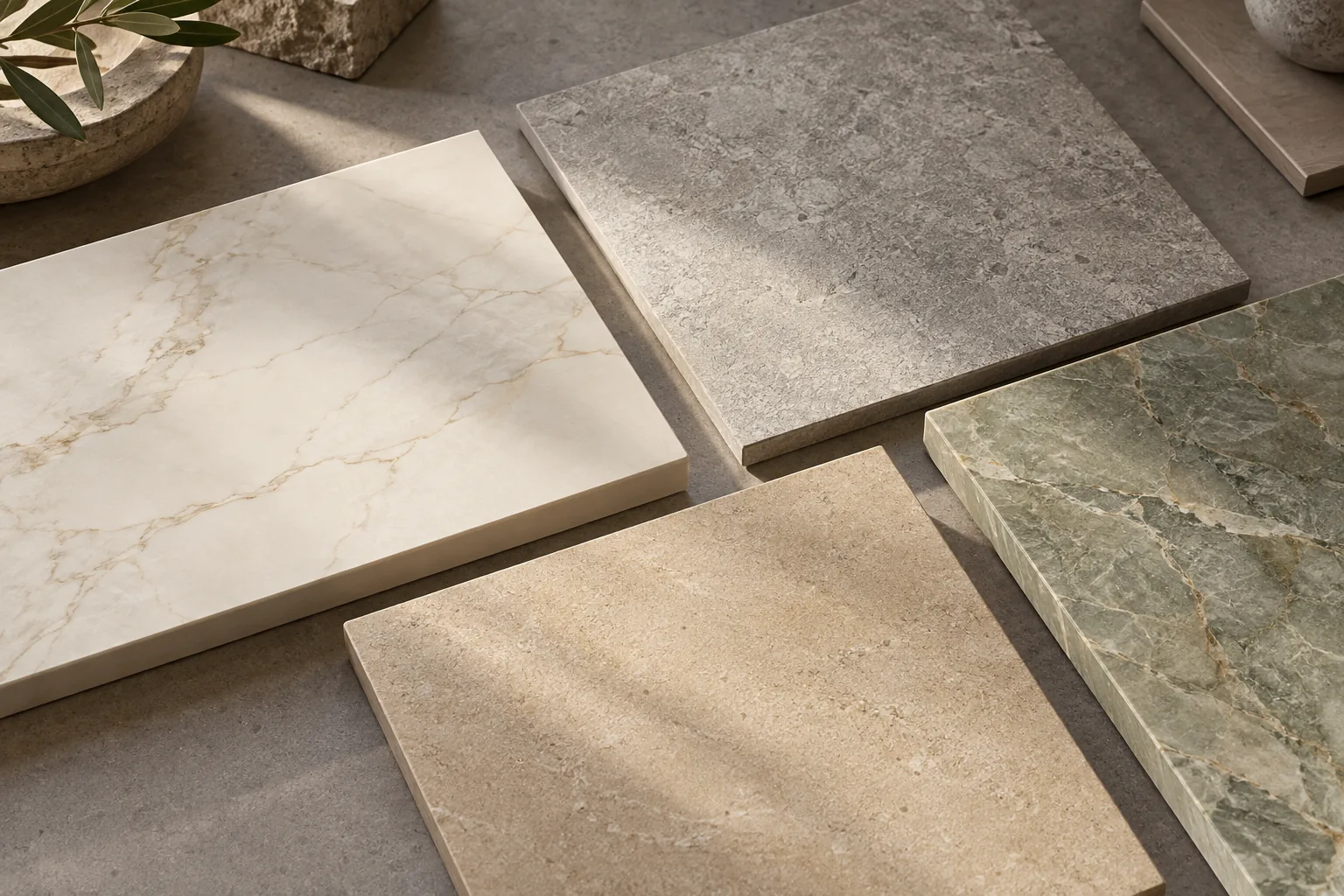
The word panel can describe a finished image while a purchasing schedule still counts tiles or boxes. Resolve that difference before quantities are compared. State the number of complete mirrored compositions required, then identify the pieces that form each one and any additional references being discussed as spares. Keep the overall dimensions and the sequence map linked to that description. If the same decorative wall is repeated in several rooms, give each occurrence a location reference so partial sets do not become confused at receiving. This does not establish packing quantities or availability; it gives the supplier a precise visual and counting brief to review for the selected patterned product.
- Count complete compositions separately from their individual pieces.
- Give repeated room panels distinct location references.
MATERIAL EDIT
Mirrored tile panels need a piece-by-piece map · Selection notes
| Decision | Review | Record |
|---|---|---|
| Pattern sequence | Specific face at each position | Numbered elevation |
| Cut pieces | Effect on the mirrored image | Opening overlay |
| Replacement | Identity of the affected face | Retained reference |
Bookmatch planning · Porcelain tiles
Questions buyers ask
Can the installer create a bookmatch from random tile faces?
A coincidental resemblance is different from an approved mirrored composition. Use the specified faces and arrangement when a defined image is required.
Is one spare tile enough for a sequenced wall?
The needed spare depends on the face and position at risk. Discuss replacement identification for the actual pattern rather than choosing an arbitrary piece.
LET’S START A CONVERSATION
Your next project
starts with a surface.
Tell us what you are sourcing. We will help turn your requirements into a clear product enquiry.