
LARGE FORMAT · DESIGN FLEXIBILITY
Solid colours · Sintered stone
A plain surface leaves fewer distractions around joints, corners and cabinetry. Its apparent simplicity makes colour agreement and the finish especially important. Start by choosing whether the slab should blend into the room or establish a clear plane against the surrounding materials.

4 matching surfaces



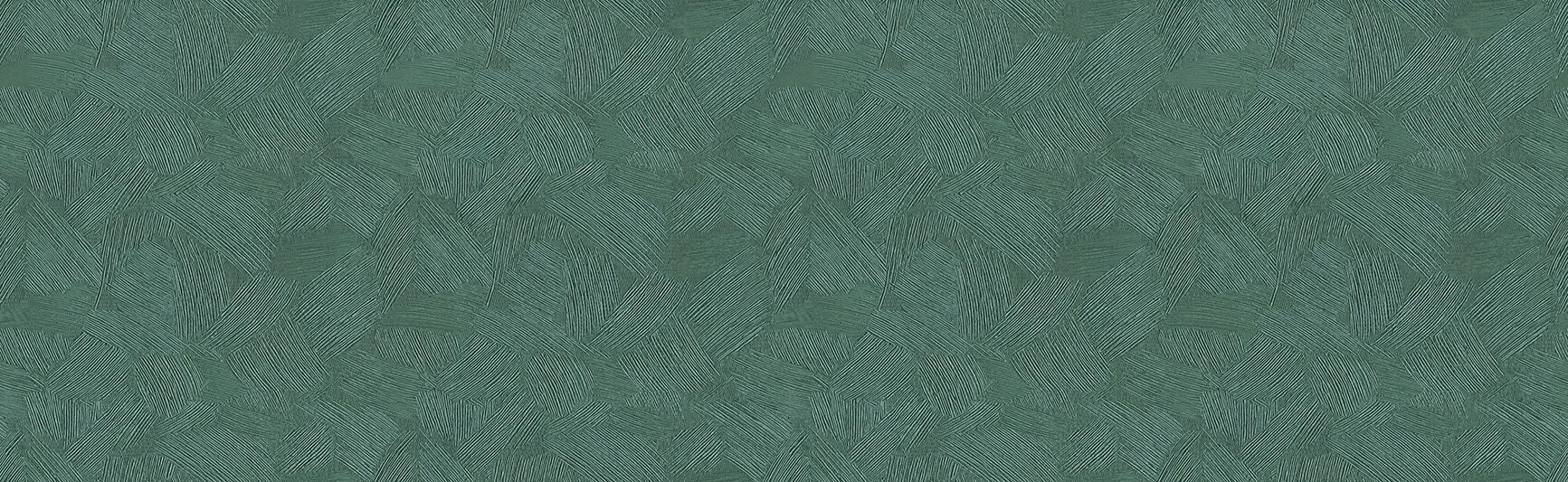
No matching products. Try another search or look.
MATERIAL EDIT
Solid-colour slabs make proportion and edges visible
Review uniformity across the actual face
A screen can flatten small changes in tone. Compare the intended full piece with the approved sample and view it from more than one angle. If a wall and countertop touch, inspect the meeting line rather than comparing two separated swatches.
- Check a broad area, not only a small chip.
- Place directly touching materials together.
Let the edge detail belong to the composition
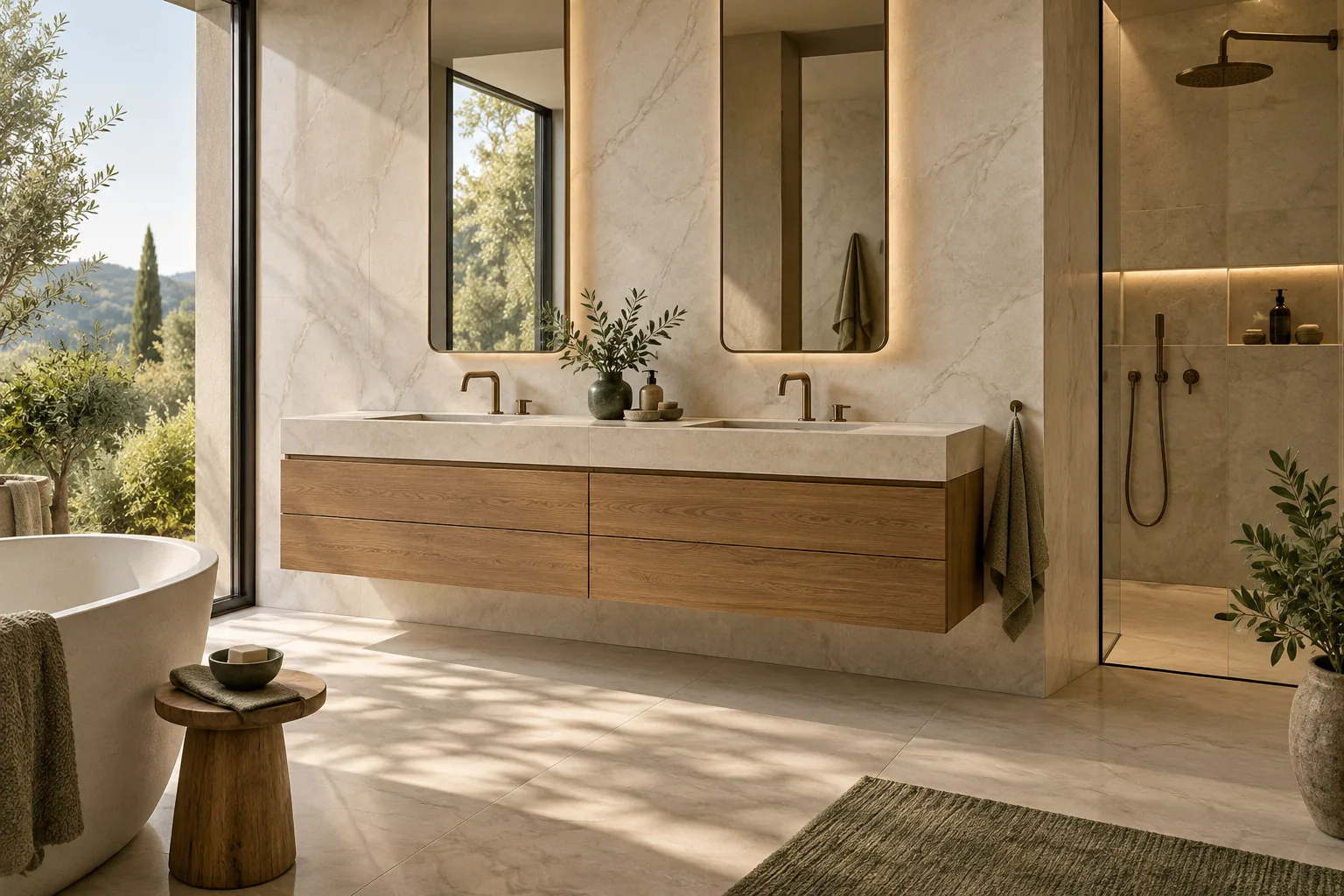
A solid face draws attention to thickness, shadow gaps and the quality of transitions. Show the desired visual edge on the drawing without treating it as a structural instruction. The fabricator should review how the effect can be achieved for the selected product and support arrangement.
- Draw the intended shadow line.
- Separate visible thickness from actual supplied thickness.
Record subtle colour decisions without relying on memory
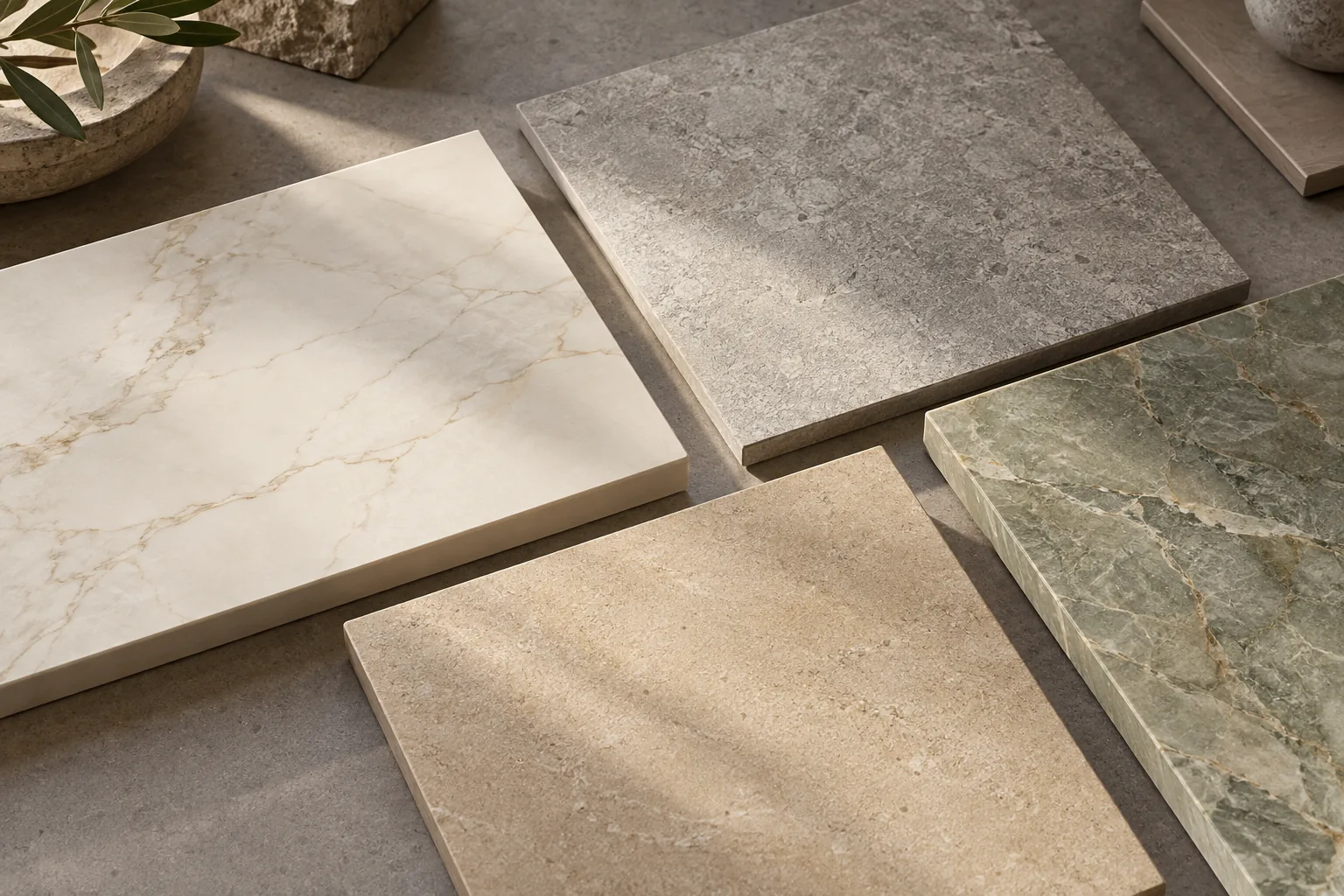
When plain surfaces differ only slightly, a conversation based on white, cream or grey can lose the reason one sample was preferred. Photograph the candidate samples together with their references visible, then write a short observation about each: warmer beside the cabinet, cooler near the metal, or too reflective in the principal view. Keep the physical references because the photograph does not establish a colour match. This selection record helps another team member understand the decision and makes later alternatives easier to discuss. It also prevents a single isolated image, taken under different light, from quietly replacing the sample relationship that was actually reviewed.
- Keep the sample identifiers visible in the comparison record.
- Write the reason for choosing a tone, not only its colour name.
MATERIAL EDIT
Solid-colour slabs make proportion and edges visible · Selection notes
| Decision | Review | Record |
|---|---|---|
| Colour field | Agreement across the face | Approved reference |
| Light and sheen | Reflections at viewing angle | Finish sample |
| Visual edge | Thickness impression and joint | Detail drawing |
Solid colours · Sintered stone
Questions buyers ask
Does solid colour mean the surface has no variation?
It describes a visual direction, not a promise of absolute optical uniformity. Review the physical sample and acceptable appearance for the supplied product.
Can a thick-looking edge be specified from the picture alone?
No. Describe the intended appearance, then have the fabricator confirm the detail, internal arrangement and support requirements.
LET’S START A CONVERSATION
Your next project
starts with a surface.
Tell us what you are sourcing. We will help turn your requirements into a clear product enquiry.