
LARGE FORMAT · DESIGN FLEXIBILITY
Travertine look · Sintered stone
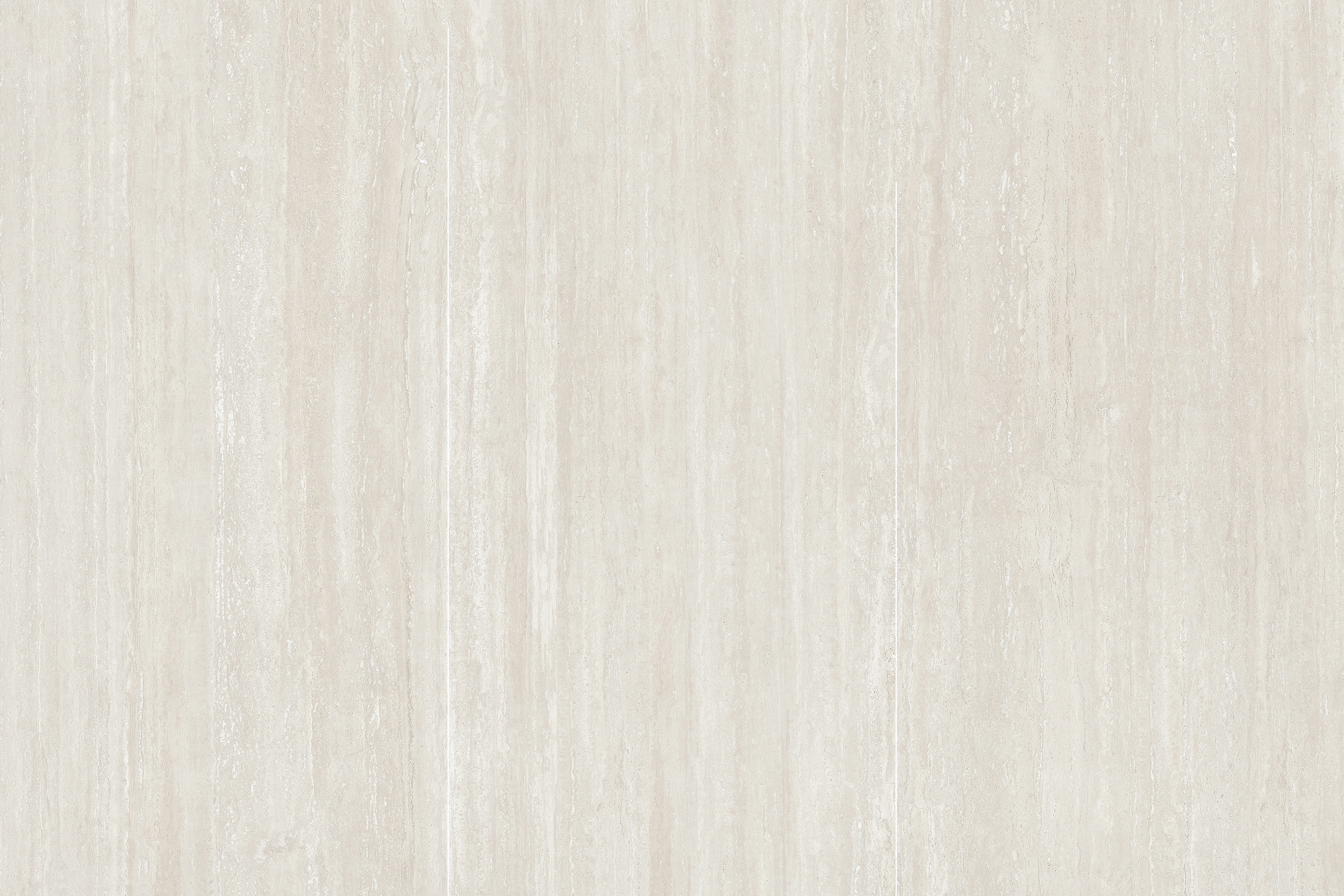
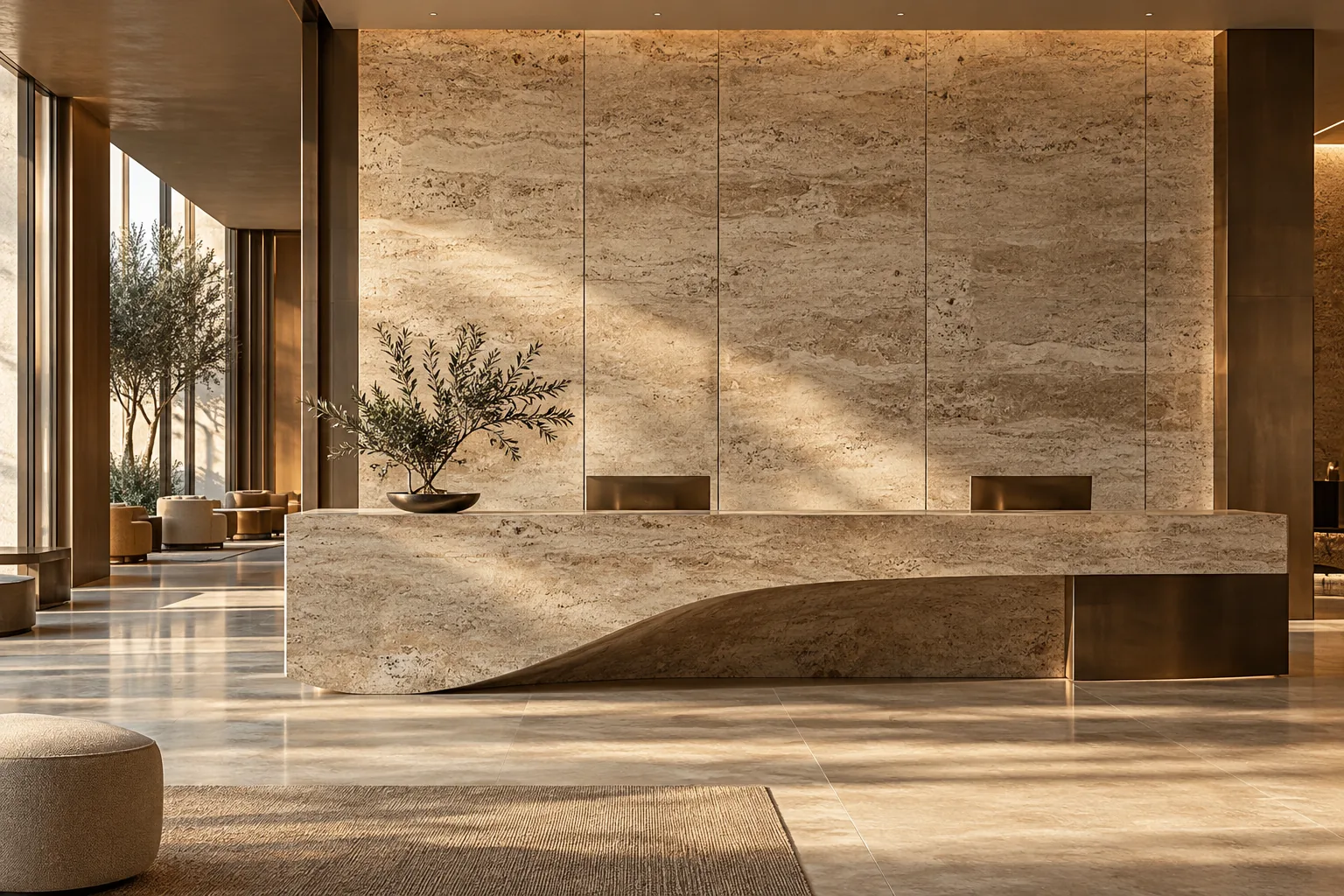
Travertine-look slabs are selected for their bands, soft transitions and sedimentary rhythm. The direction of those layers changes how a wall or furniture face is read: horizontally they can broaden a composition; vertically they draw attention to height. Start with the elevation rather than a colour name.

1 matching surfaces
No matching products. Try another search or look.
MATERIAL EDIT
Travertine-inspired layers at architectural scale
Carry the layers through panel breaks
Plot each visible panel on the wall elevation and mark the direction of its lines. A narrow return or cabinet side may interrupt an otherwise calm run. Decide whether adjacent bands should align approximately or simply share a common direction; these are different visual expectations.
- Mark horizontal and vertical layer directions.
- Show returns beside the main elevation.
Check the visual texture separately from surface texture
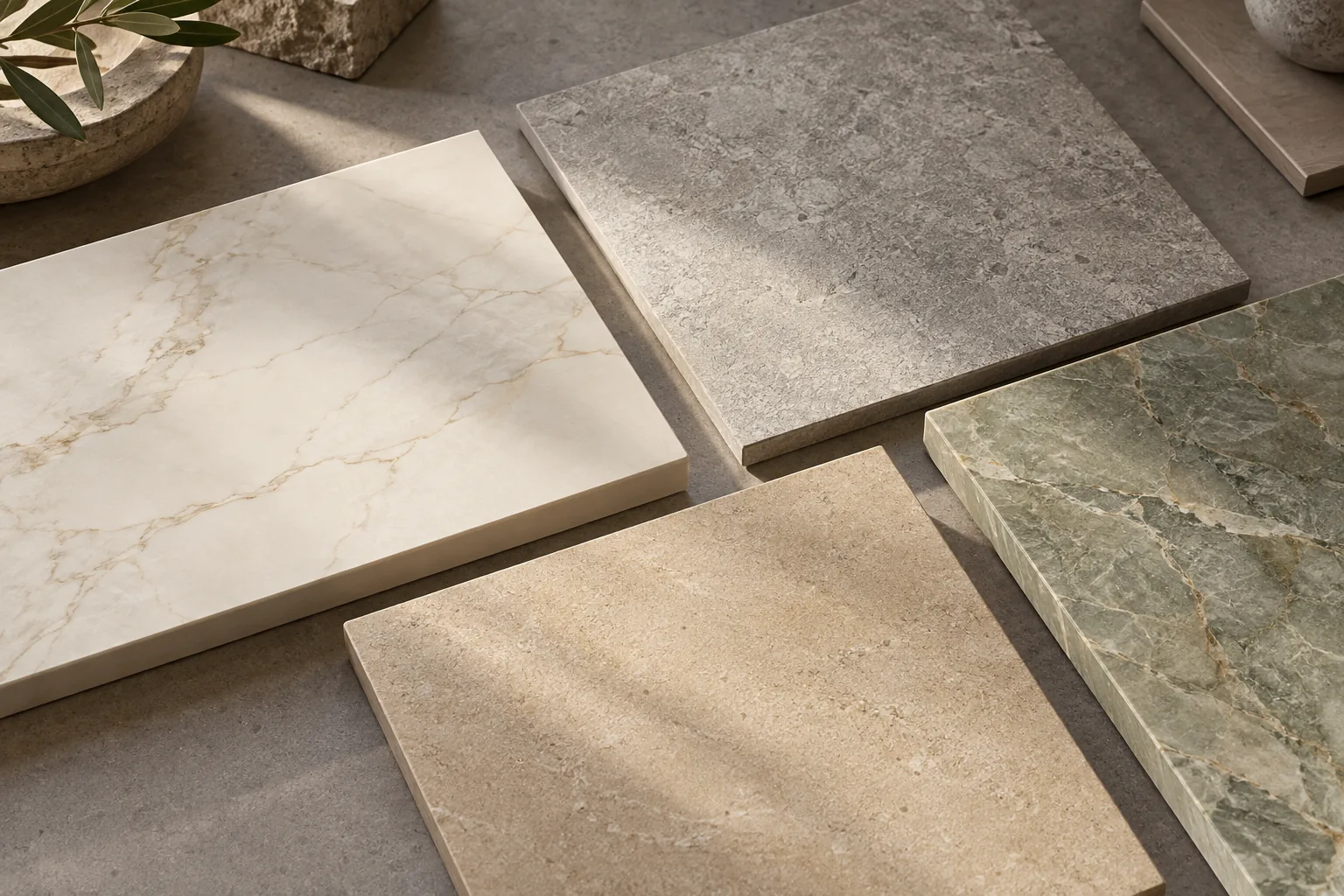
A printed reference to stone pores does not describe the physical relief or cleaning behaviour of a slab. Compare the sample by sight and touch. Select the finish for the actual furniture or wall role, then confirm the product-specific information that supports that choice.
- Distinguish printed pores from physical recesses.
- Review a sample under grazing light.
Show layer spacing at the distance people will see it
The spacing of travertine-inspired bands can look quite different on a reception wall and on a small furniture front. Build a simple elevation using the actual width of the intended surface and include a door or another familiar object for scale. Then review it from the main approach, rather than only as a close-up. Fine lines may merge into a quiet tone at distance, while wider bands can remain prominent. This presentation helps the buyer decide whether the layered effect should be noticed immediately or discovered closer to the surface. Retain that scale reference when comparing alternative designs with similar sand or cream colours.
- Include a recognisable scale reference in the elevation.
- Compare fine and broad layers from the principal approach.
MATERIAL EDIT
Travertine-inspired layers at architectural scale · Selection notes
| Decision | Review | Record |
|---|---|---|
| Layer direction | Reading across the elevation | Orientation arrows |
| Panel junction | Continuity or intentional break | Joint sketch |
| Texture | Image versus actual relief | Physical sample |
Travertine look · Sintered stone
Questions buyers ask
Can travertine layers run in both directions?
They can be explored in either orientation, but the full-face composition and cutting arrangement determine the final appearance. Confirm the intended direction before fabrication.
Does this look contain the holes of natural travertine?
A visual stone reference does not establish actual pores. Inspect the chosen slab sample and finish rather than assuming the texture from its name.
LET’S START A CONVERSATION
Your next project
starts with a surface.
Tell us what you are sourcing. We will help turn your requirements into a clear product enquiry.