
LARGE FORMAT · DESIGN FLEXIBILITY
Cement look · Sintered stone
Cement-look slabs bring broad tonal movement rather than a recognisable stone vein. The design question is how much clouding a large uninterrupted piece should carry. Study subtle marks at full size: a small variation can become a focal patch on an otherwise restrained wall or table.

0 matching surfaces
No published models in this collection.
MATERIAL EDIT
Concrete-inspired slabs with a controlled visual field
Compare the centre and the perimeter
A crop from the middle may omit darker edges or concentrated surface marks. Review how the finished shape sits within the face and whether adjoining components carry similar visual density. For a long countertop, decide whether the composition should read as one continuous field or as separate intentional parts.
- Check tonal changes near proposed edges.
- Position concentrated marks on a layout drawing.
Use lighting to judge the chosen finish
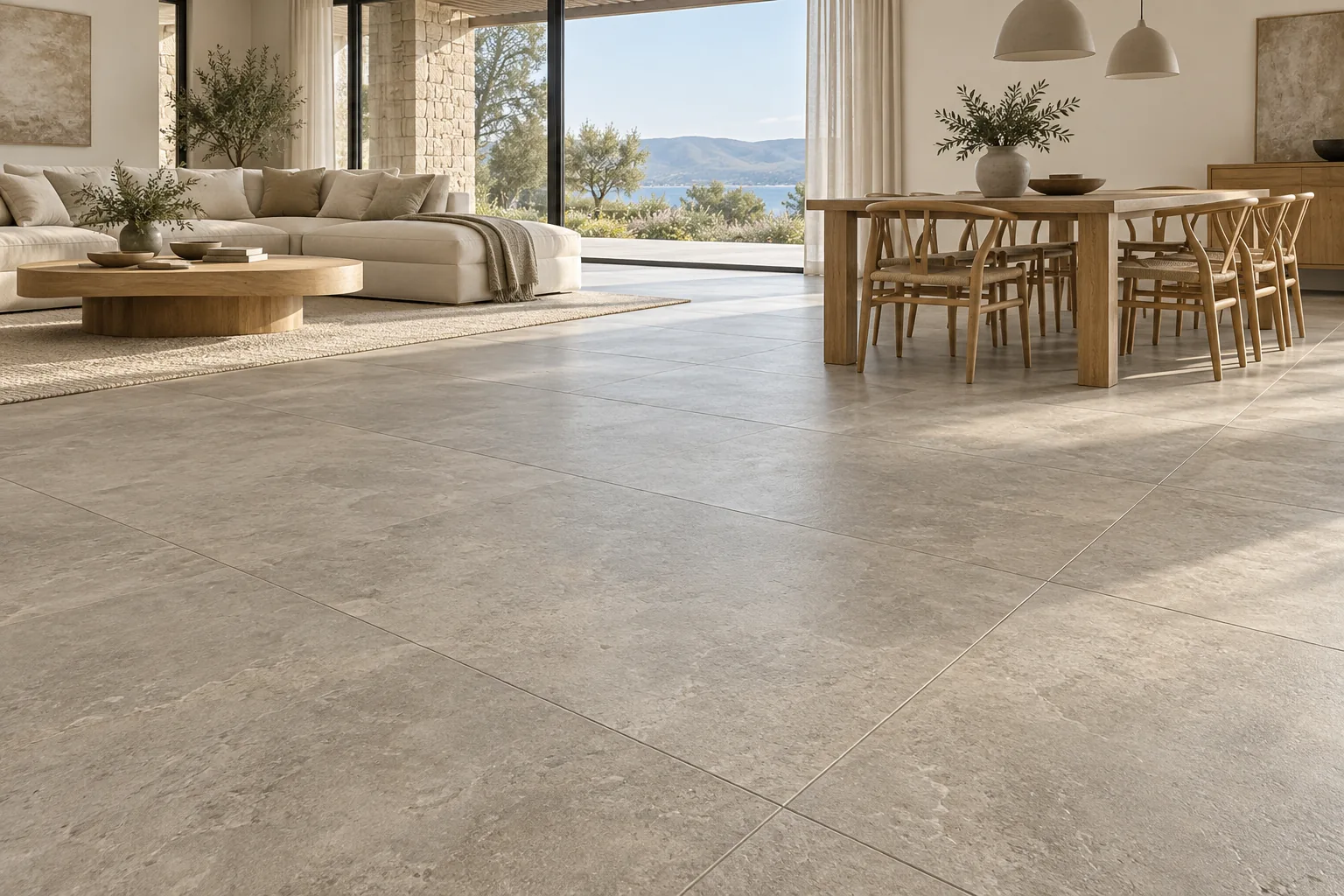
Soft concrete imagery can be paired with different actual surface treatments. Reflective light may make a quiet print more prominent, while side lighting can reveal real texture. Evaluate the selected physical surface and keep the approved lighting conditions in the sample record.
- View a sample beside the planned metal or paint.
- Record the finish separately from the cement-look label.
Test the negative space around furniture and fittings
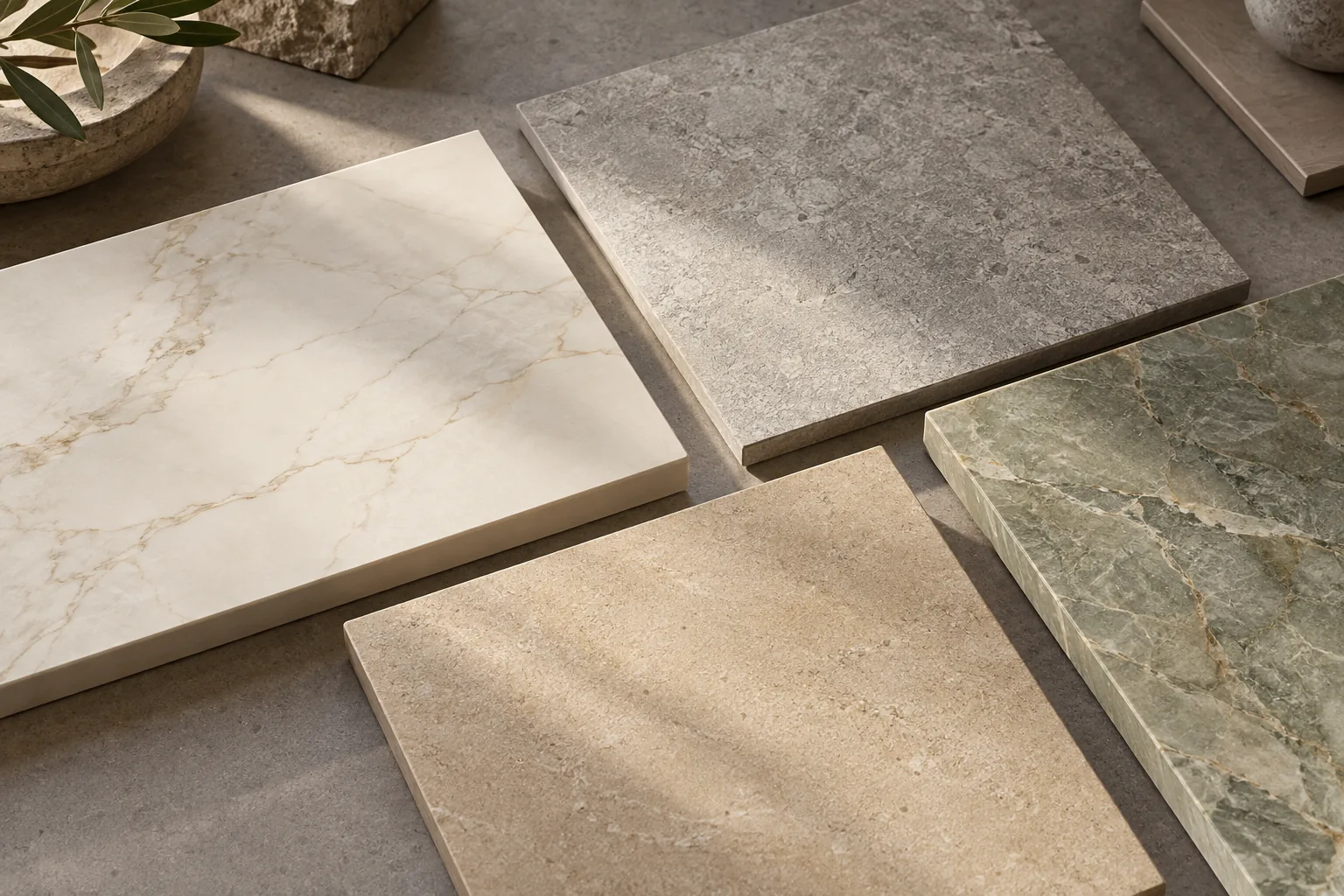
A quiet cement-look slab often acts as the background between more noticeable objects. Instead of filling the entire presentation with cropped surface images, place the material behind a simple outline of the proposed furniture or fittings. Look at the exposed areas that remain: the strip above a cabinet, the space beside a basin or the broad field around a table base. A concentrated cloud may appear unimportant on the whole face but dominate one of those smaller visible areas. This exercise helps decide where a subdued surface is genuinely needed and where a little movement can contribute to the composition without taking attention away from the room.
- Mark the surface that remains visible after furniture is added.
- Check isolated clouds in narrow exposed areas.
MATERIAL EDIT
Concrete-inspired slabs with a controlled visual field · Selection notes
| Decision | Review | Record |
|---|---|---|
| Clouding | Distribution across a broad part | Full-piece reference |
| Perimeter tone | Changes around trimmed boundaries | Cutting outline |
| Light response | Actual finish and texture | Lighting note |
Cement look · Sintered stone
Questions buyers ask
Will a cement-look slab have no visible pattern?
Not necessarily. Tonal clouds, marks and fine texture may be part of the design. Inspect the full face if a highly uniform surface is required.
Can concrete-look imagery replace a finish sample?
It cannot show actual gloss, relief or tactile response. Keep a physical sample for the chosen finish even when the design appears visually simple.
LET’S START A CONVERSATION
Your next project
starts with a surface.
Tell us what you are sourcing. We will help turn your requirements into a clear product enquiry.