
WALLS & FLOORS · COORDINATED COLLECTIONS
Cement look · Porcelain tiles
Concrete-inspired porcelain tiles use soft marks and tonal clouds to create an understated field. The grid remains part of the design, especially in a large open room. Compare the visible joint pattern with the level of visual uniformity you want, rather than expecting tiled material to resemble a seamless poured floor.

1 matching surfaces
No matching products. Try another search or look.
MATERIAL EDIT
A concrete-look floor reveals the geometry of the room
Choose where the grid begins
A centred layout, a line aligned to cabinetry and a layout running from the main entrance produce different perimeter cuts. Establish the priority view before calculating the field. Include columns, thresholds and changes in room width so the grid is resolved across the whole plan.
- Locate the principal alignment line.
- Compare narrow cuts at opposite boundaries.
Examine clouding under the proposed lighting
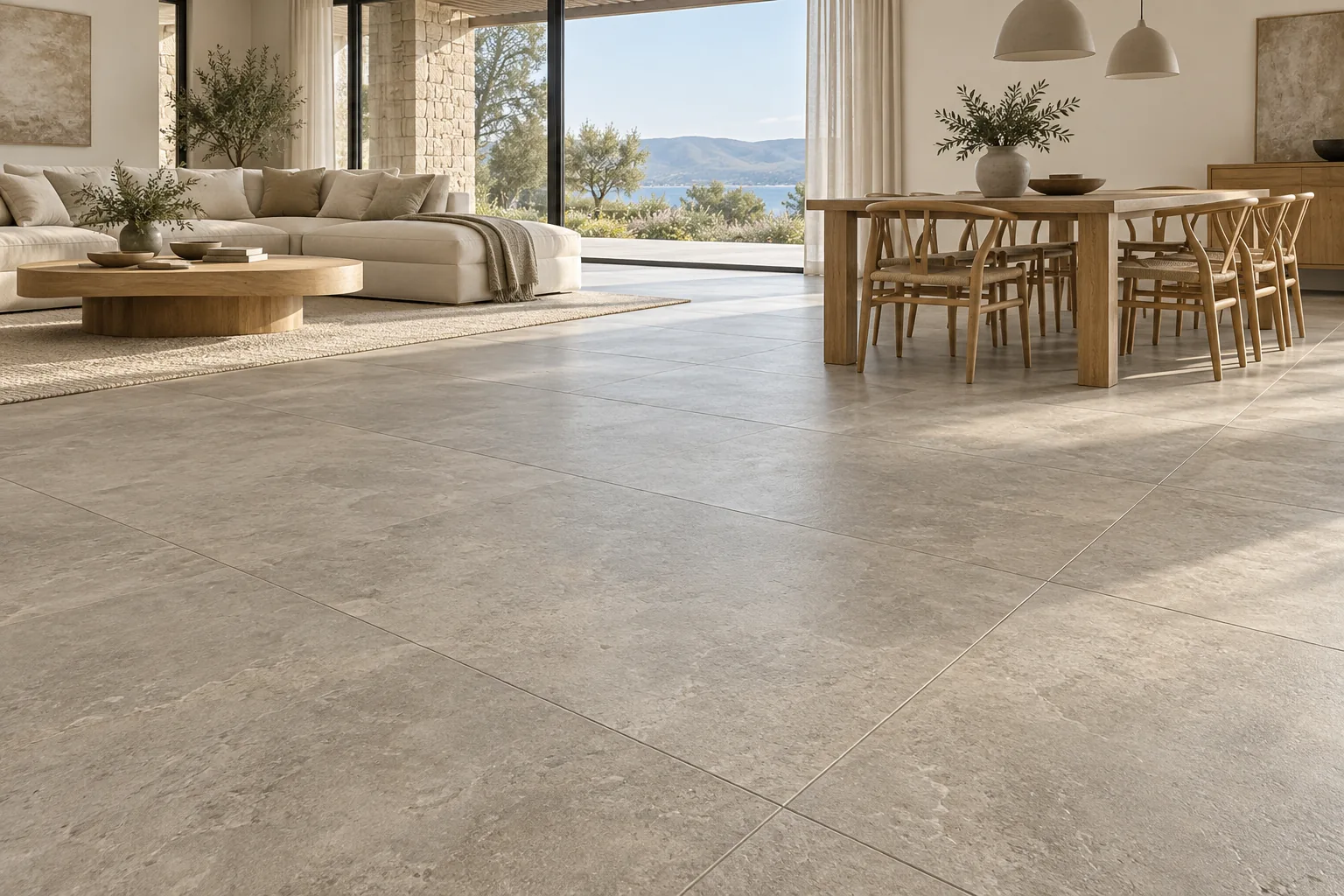
Subtle concrete marks can become more apparent with side lighting or over a wide area. Use several pieces to judge their distribution. A warmer or cooler grout tone can also change the reading of the grey field, so test the pairing instead of choosing grout from its colour name.
- Distribute stronger tonal faces.
- Review the grout under the room’s intended light.
Discuss daily cleaning with a sample, not a colour stereotype
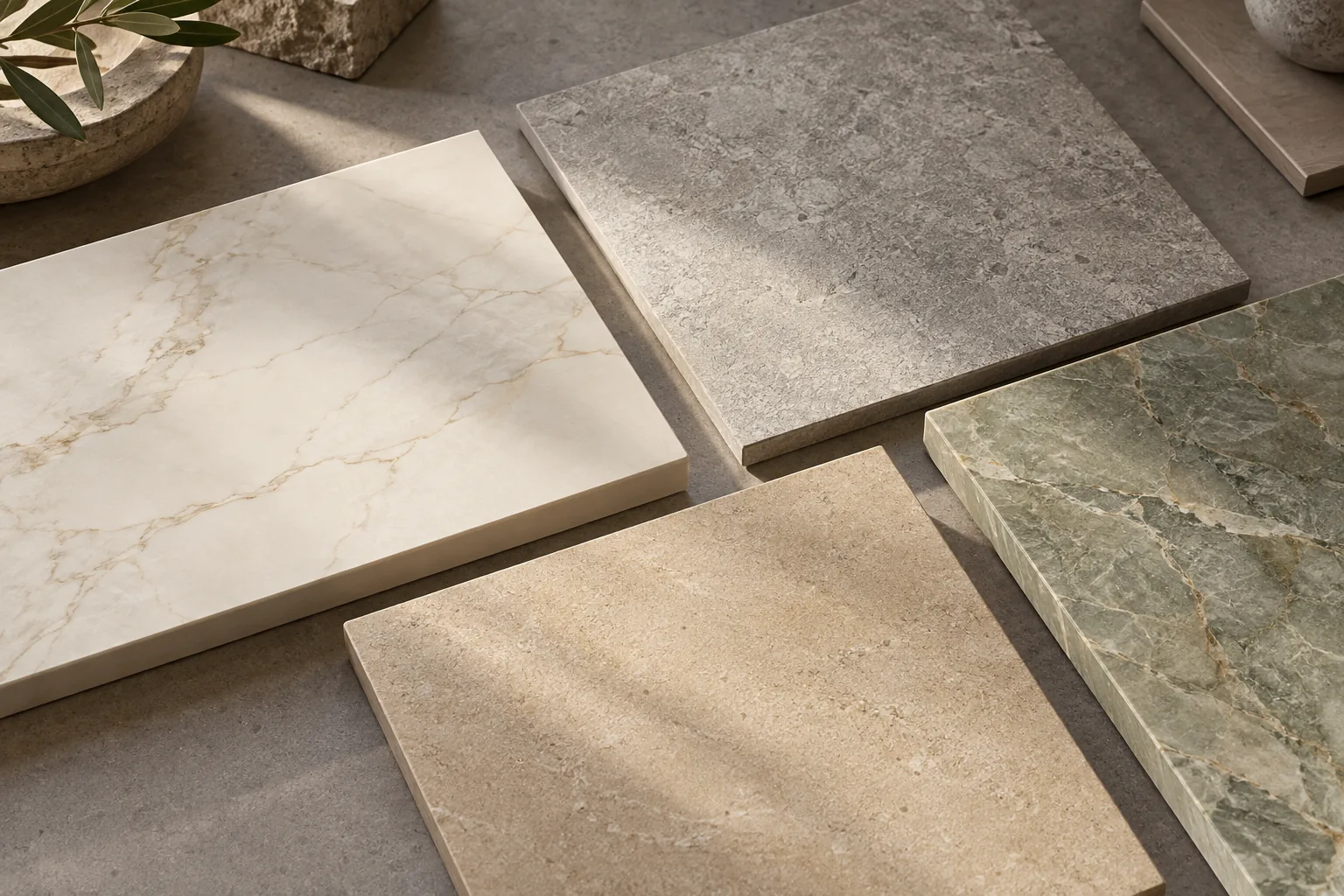
A pale or dark concrete-inspired tile may make different everyday marks more noticeable, but colour alone does not determine how a surface should be cleaned. Use the intended sample and the product’s care guidance when discussing the room’s practical routine. Show the buyer the actual finish and any real texture rather than describing every concrete effect as either smooth or rough. For a commercial area, ask who will clean the floor and what information that team needs for the selected surface. This adds a practical question to an otherwise appearance-led choice without inventing stain, chemical or abrasion performance from a photograph of a cement pattern.
- Keep cleaning guidance tied to the actual product and finish.
- Ask the user of the room how routine care will be organised.
MATERIAL EDIT
A concrete-look floor reveals the geometry of the room · Selection notes
| Decision | Review | Record |
|---|---|---|
| Layout origin | Entrance or joinery alignment | Set-out plan |
| Clouding | Distribution of stronger marks | Multi-tile view |
| Grid emphasis | Joint colour beside actual grey | Grout test |
Cement look · Porcelain tiles
Questions buyers ask
Will concrete-look tiles create a completely seamless floor?
No. Tile joints and movement joints remain part of the installation. They can be coordinated visually but should not be omitted to imitate a poured surface.
How should I judge a very subtle concrete pattern?
View multiple pieces together at room scale and under the proposed light. A close-up on a screen may exaggerate or hide the variations.
LET’S START A CONVERSATION
Your next project
starts with a surface.
Tell us what you are sourcing. We will help turn your requirements into a clear product enquiry.