
WALLS & FLOORS · COORDINATED COLLECTIONS
Expressive stone · Porcelain tiles
Bold colours and mineral formations can make porcelain tiles a decorative focus. Because the design is divided into pieces, the arrangement matters as much as the individual print. Start with the principal wall or floor zone, then decide how the stronger faces will be distributed within it.

0 matching surfaces
No published models in this collection.
MATERIAL EDIT
Expressive tile effects work best with an intentional sequence
Give the accent a defined boundary
A niche, reception backdrop or selected floor zone can contain a strong design more clearly than an unrestricted spread. Draw the edges of that area and review partial pieces. A striking face cut into a very narrow strip may create visual noise instead of the intended accent.
- Define where the expressive field begins and ends.
- Keep important motifs clear of awkward perimeter cuts.
Control repetition without demanding false continuity
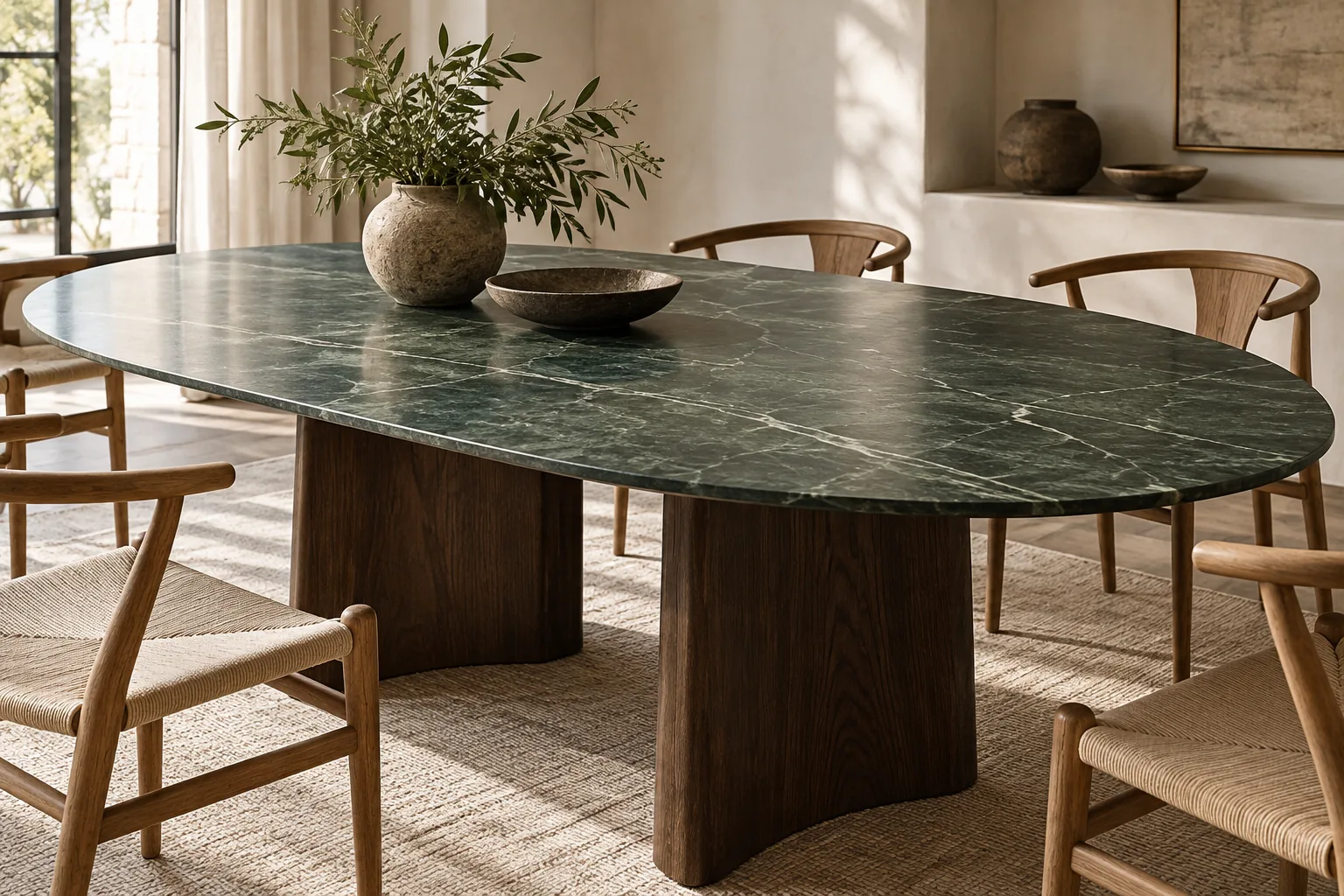
Some designs work through varied placement; others need a planned sequence. Ask which applies to the selected model and review enough faces to judge it. Use a quieter neighbouring tile to test whether the accent remains readable, particularly where the room contains patterned furniture or decorative metalwork.
- Number sequence-dependent pieces.
- Compare one neutral companion before adding more patterns.
Help the customer compare a close detail with a furnished room view
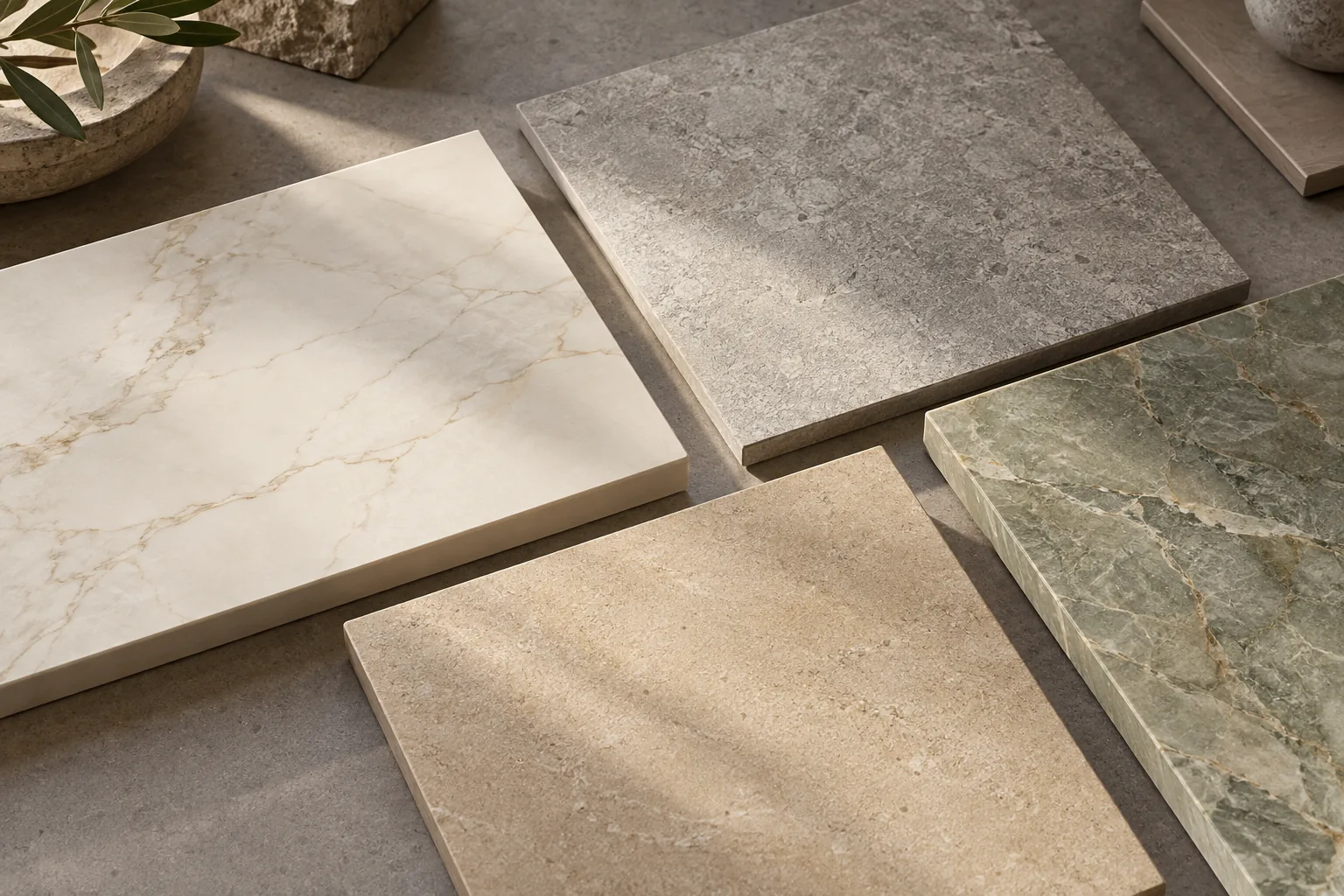
A bold tile may look compelling close up yet become either too busy or surprisingly quiet once furniture covers part of the field. Present the product detail beside a furnished layout that keeps the same pattern scale. Identify any visualisation as illustrative and retain the original tile reference nearby. Let the buyer compare which features remain visible above a console, around a display stand or between loose furniture. This is especially useful for decorative mineral colours whose identity depends on one recognisable formation. The comparison reveals whether the chosen design supports the intended room scene without suggesting that a styled reference image proves a completed project or a particular performance.
- Keep pattern scale consistent between detail and room studies.
- Identify the remaining visible motifs after furniture is added.
MATERIAL EDIT
Expressive tile effects work best with an intentional sequence · Selection notes
| Decision | Review | Record |
|---|---|---|
| Accent zone | Extent of the decorative field | Bounded layout |
| Feature pieces | Positions of strongest faces | Numbered board |
| Neighbouring surfaces | Balance with other decoration | Palette study |
Expressive stone · Porcelain tiles
Questions buyers ask
Can I spread a bold tile through the entire room?
You can explore it, but review the complete face distribution and room contents. A bounded accent may communicate the design more clearly than repeating it everywhere.
Are expressive stone-look tiles supplied in a fixed picture sequence?
That depends on the product. Confirm whether it is a sequenced composition or a range of varied faces before the installer begins.
LET’S START A CONVERSATION
Your next project
starts with a surface.
Tell us what you are sourcing. We will help turn your requirements into a clear product enquiry.