
LARGE FORMAT · DESIGN FLEXIBILITY
Wood look · Sintered stone
Wood-look slabs are explored as a surface design, not as timber boards. The length of the grain, its spacing and the shape of the finished furniture part determine the result. Review a broad face if the intent is a monolithic table or cabinet composition rather than a planked appearance.
0 matching surfaces
No published models in this collection.
MATERIAL EDIT
Wood grain across furniture-scale slab faces
Draw the grain through every visible face
A tabletop, side panel and apron can show the same grain in very different ways. Put arrows on the component drawings and identify which connections should feel continuous. A rotated piece may be technically the same design while appearing visually unrelated to the top.
- Show grain direction on each component.
- Check narrow aprons against the main face.
Choose a deliberate edge relationship
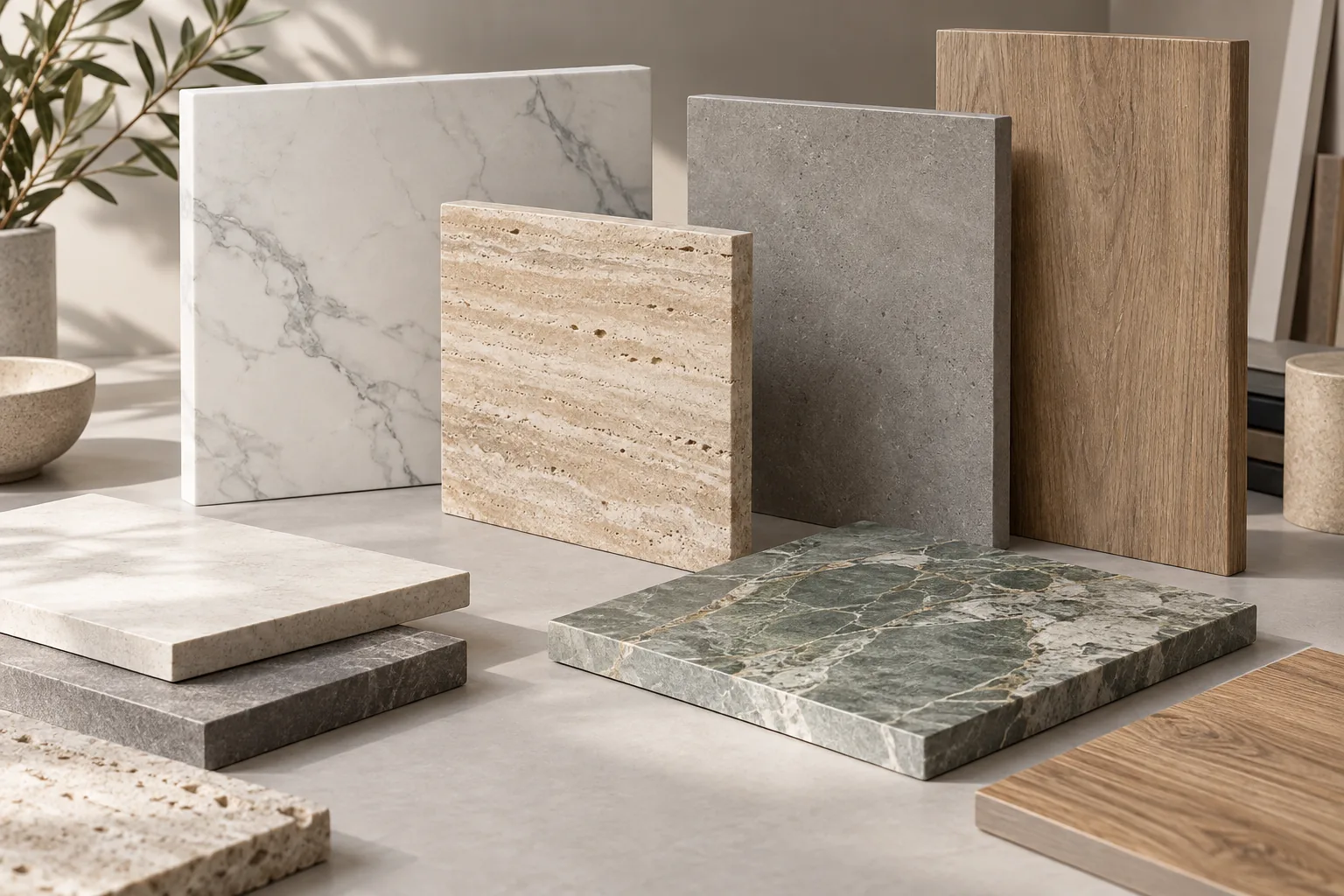
The printed face and the exposed edge need separate review. Decide whether the edge is expressed as its own material line or forms part of a fabricated visual treatment. Do not assume a wood print continues through the slab thickness.
- Review a physical edge sample.
- Compare grain scale beside real timber joinery.
Keep digital wood-grain previews at a believable scale
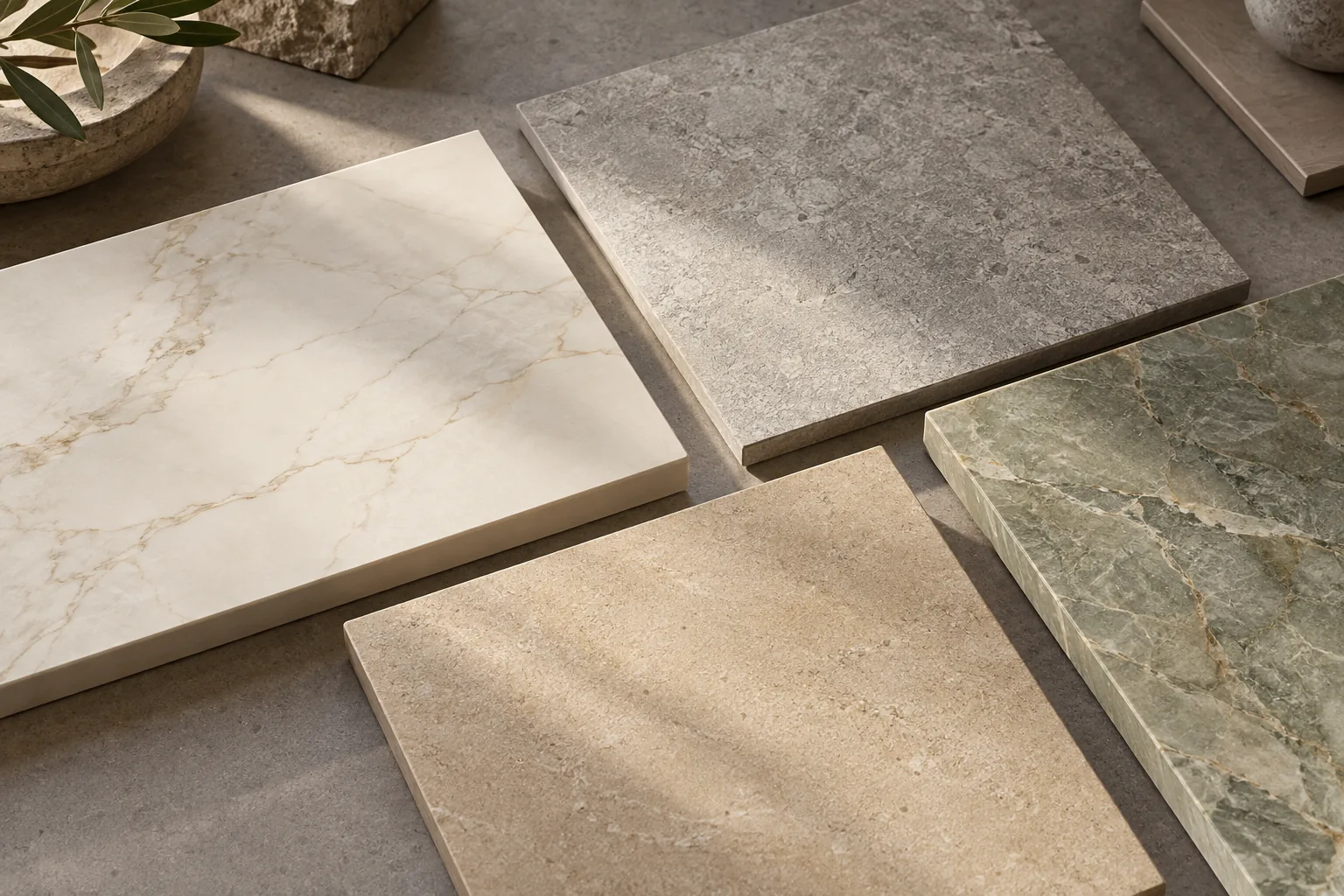
A furniture mock-up can become misleading when the wood image is stretched to fill every part without preserving its original proportions. The same knot may become oversized on a cabinet door and too fine on the tabletop beside it. Ask for the layout to retain a consistent relationship between the complete slab image and the dimensions of each component. Use a separate detail image when closer examination is needed instead of enlarging the main texture arbitrarily. The aim is to compare the design composition, not to suggest that the print can be resized independently for every piece. Keep these previews identified as layout studies rather than production photographs.
- Preserve the image proportions across all component previews.
- Distinguish a layout study from an actual finished-product photograph.
MATERIAL EDIT
Wood grain across furniture-scale slab faces · Selection notes
| Decision | Review | Record |
|---|---|---|
| Grain length | Relationship to finished part | Direction drawing |
| Adjacent faces | Continuity at corners | Component arrangement |
| Exposed edge | Body and face relationship | Edge sample |
Wood look · Sintered stone
Questions buyers ask
Is the wood pattern the same as natural timber construction?
No. This is a wood-inspired surface design on a slab. Its structure, edge appearance and processing requirements need to be assessed as the selected slab product.
Should a tabletop grain run lengthwise?
That is a design decision. Compare both orientations in the actual tabletop outline and consider the relationship with nearby cabinetry before approving one.
LET’S START A CONVERSATION
Your next project
starts with a surface.
Tell us what you are sourcing. We will help turn your requirements into a clear product enquiry.