
A PRACTICAL STARTING POINT
Area & quantity planner
Estimate pieces from net area and an allowance you choose. This is an area calculation, not cutting optimisation or a confirmed order quantity.
A PRACTICAL STARTING POINT
Turn an area
into a first estimate.
- Enter the net area from the project schedule.
- Use the actual piece dimensions you are considering.
- Choose an allowance based on your layout and installer’s review.
- Confirm the final quantity against a cutting or laying plan.
Pieces = round up [net area × (1 + allowance / 100) ÷ (length × width / 1,000,000)].
A PRACTICAL BUYER’S REFERENCE
Understand what an area estimate can and cannot tell you
The calculator translates an area and allowance into a starting quantity. It does not nest countertop parts on slabs, design a laying pattern or determine container loading. Keep the arithmetic separate from fabrication and logistics decisions.
A worked tile example
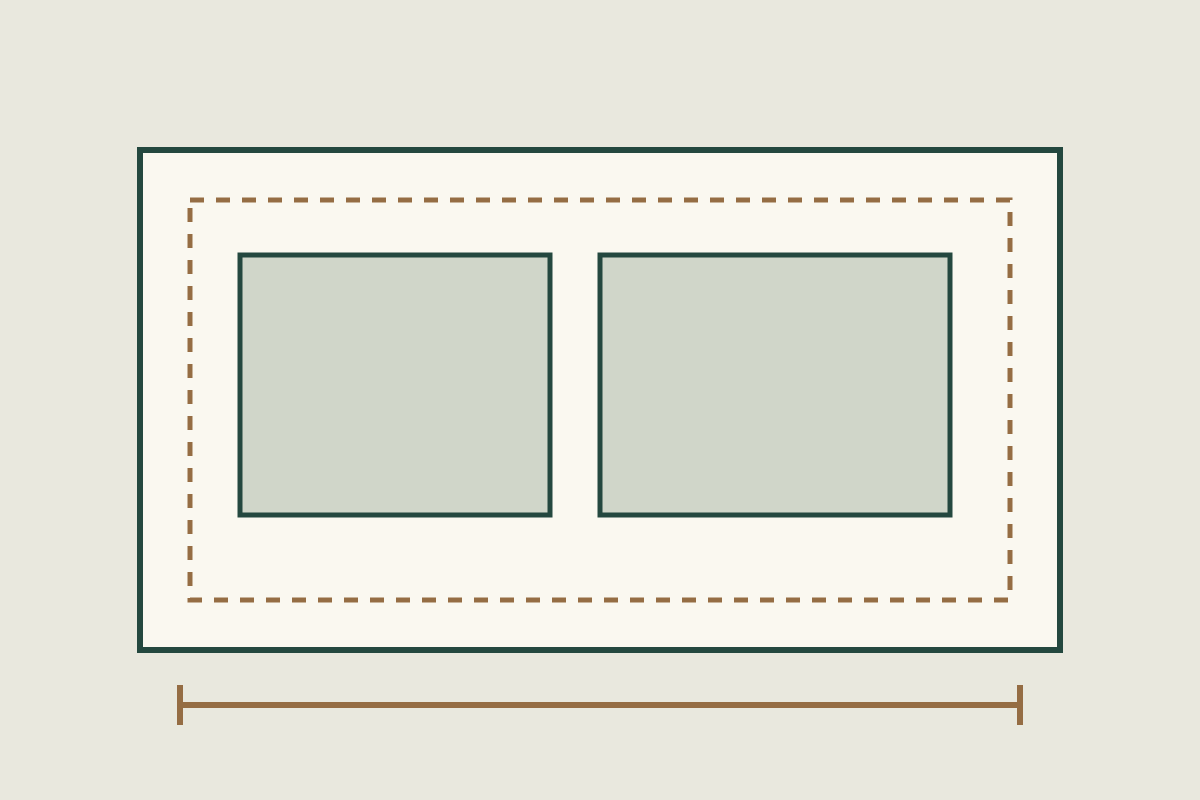
Suppose the measured area is 24 m² and you choose a 10% allowance. The adjusted area is 26.4 m². A nominal 600 × 1200 mm tile covers 0.72 m², so 26.4 ÷ 0.72 is 36.67: rounding up gives 37 pieces, equivalent to 26.64 m² before any carton rounding.
- The allowance in this example is an input, not a recommendation.
- Reconcile the final order with the supplier’s carton quantity.
Why slab fabrication needs another step
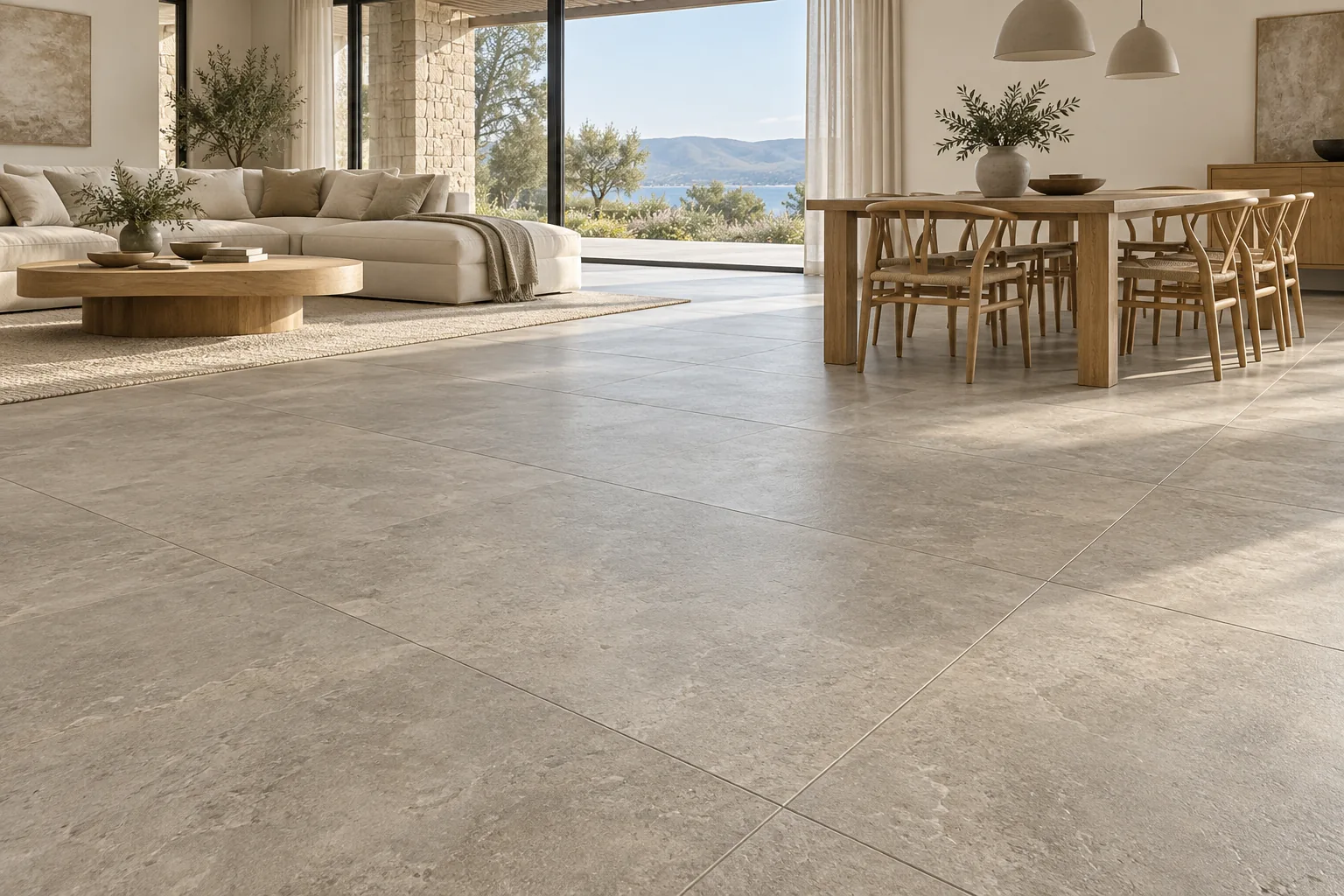
A rectangular area result does not show whether individual parts fit within the usable slab or whether veins can align. Corners, holes, edge build-ups and required spare parts can affect yield. Give the fabricator the component schedule before using the estimate as a slab purchase quantity.
- Check the entered unit and nominal piece dimensions.
- Use a cutting layout for part-based enquiries.
A PRACTICAL BUYER’S REFERENCE
Interpret the result correctly
| Result | What it means | What comes next |
|---|---|---|
| Measured area | The geometry entered by the user | Check the actual site dimensions |
| Adjusted area | Area after the chosen allowance | Review the allowance for the layout |
| Rounded pieces | Whole units at the entered dimensions | Check cartons or fabrication yield |
Area & quantity planner
Questions buyers ask
Why can the ordered area exceed the adjusted area?
Material is purchased in whole pieces or packages. Rounding 36.67 tiles up to 37 increases the represented area; carton packing can add another rounding step.
Does a 10% allowance work for every project?
No. The example only demonstrates arithmetic. The installer or fabricator should assess the layout, cuts, pattern direction and spare-material requirement.
LET’S START A CONVERSATION
Your next project
starts with a surface.
Tell us what you are sourcing. We will help turn your requirements into a clear product enquiry.