
WALLS & FLOORS · COORDINATED COLLECTIONS
Travertine look · Porcelain tiles
A tiled travertine effect is shaped by the way its lines repeat across a grid. Horizontal bands, vertical pieces and mixed directions produce very different rooms. Consider the entire wall or floor field, including where the pattern stops at a doorway or turns into a niche.

0 matching surfaces
No published models in this collection.
MATERIAL EDIT
Travertine-look tiles create rhythm through direction
Agree one direction strategy for each area
Laying every face in the same direction emphasises long bands. Alternating orientations makes the grid more active. Neither result should be left to an accidental mix on site. Use a simple laying reference that includes the most visible wall and the return beside it.
- Mark the first row and the continuing direction.
- Review corners and niche reveals in the same layout.
Coordinate banding with tile joints
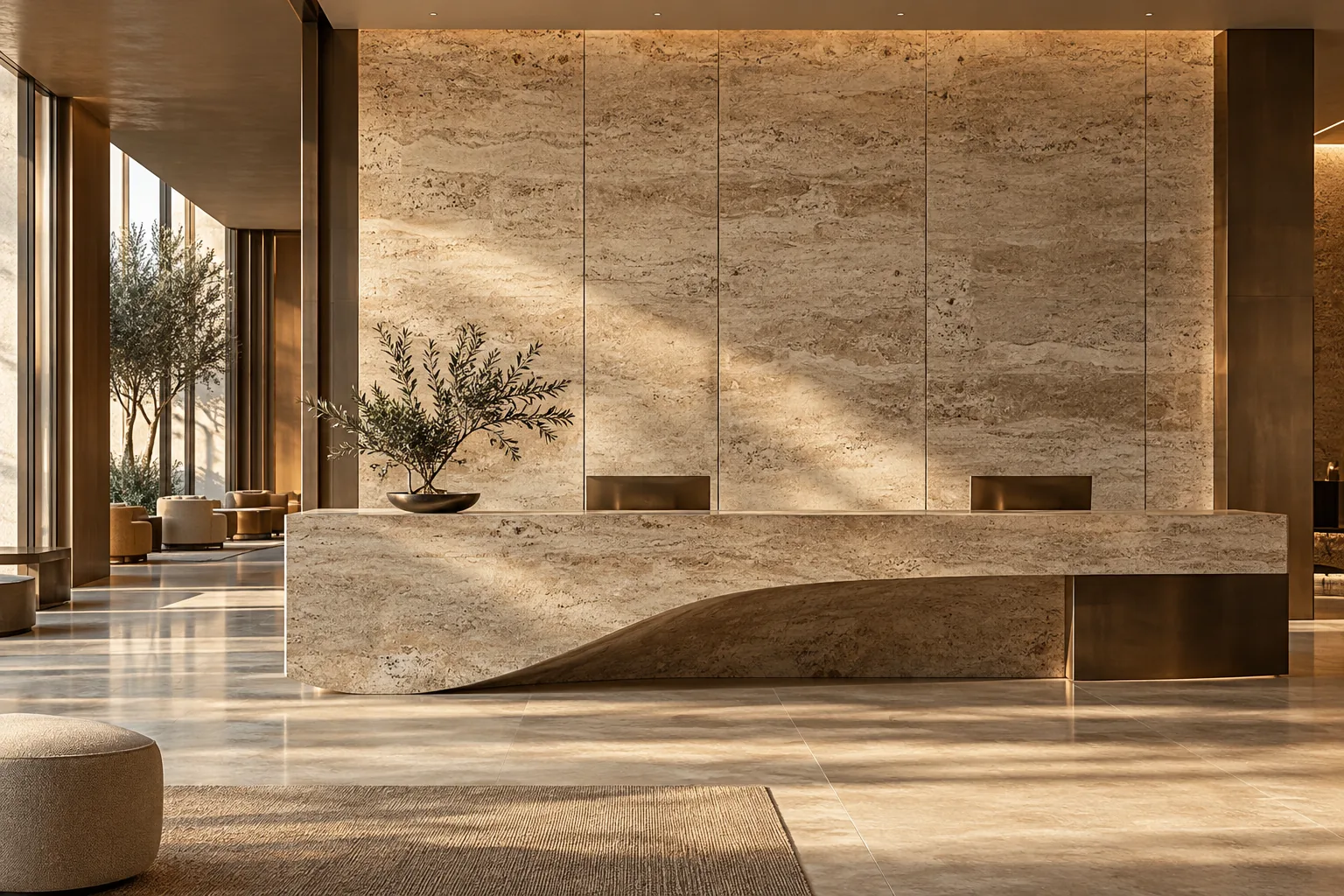
Strong lines can make slightly shifted features more noticeable at a joint. Decide whether visual alignment is important or whether the intended effect is an overall layered field. Compare several tiles before selecting the grout tone, because the darkest band may not represent the main background.
- Choose grout against the dominant ground colour.
- Check cut pieces at the edge of the field.
Separate the layered image from assumptions about natural stone care
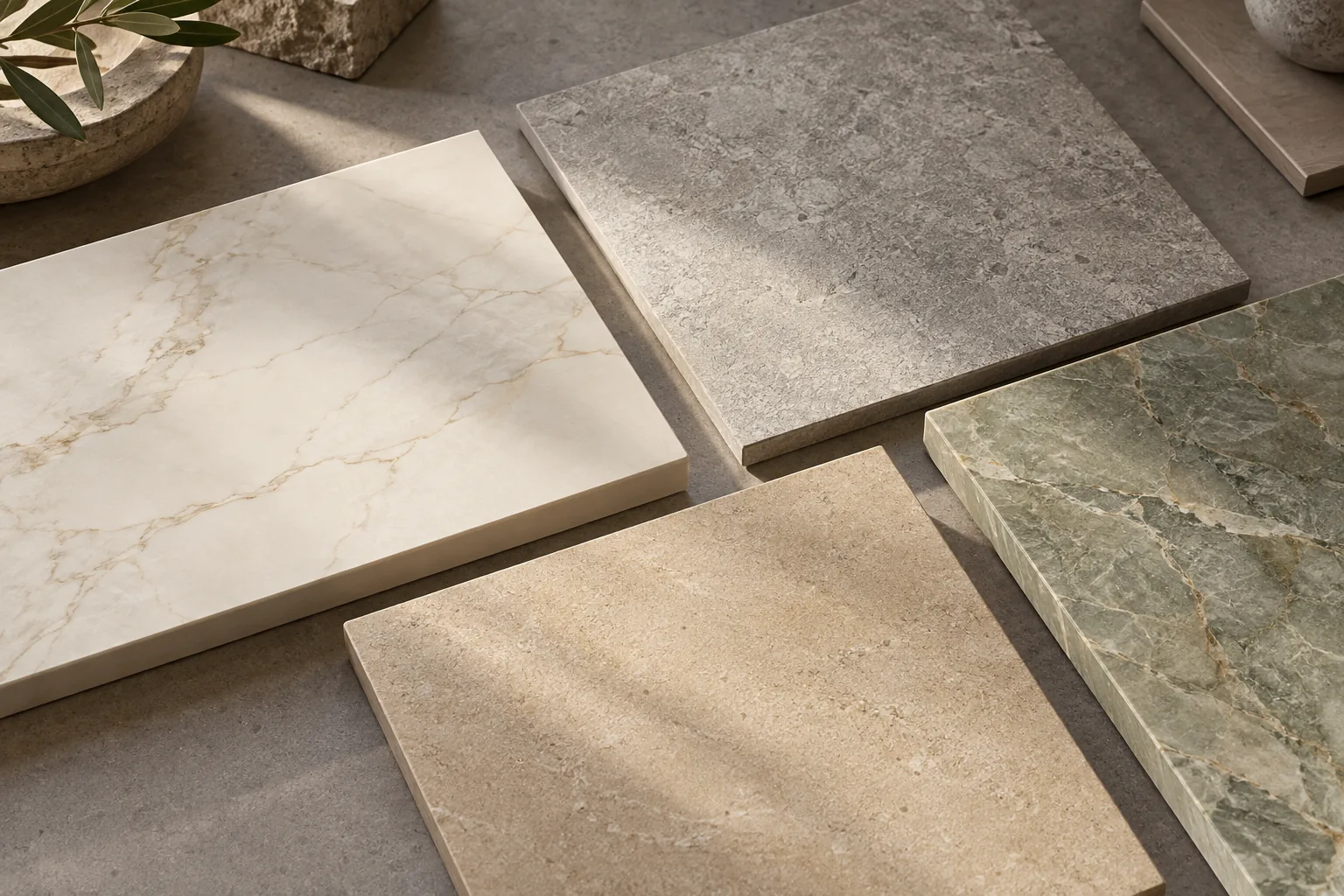
Travertine imagery can lead a showroom visitor to ask about filled holes, sealing or the maintenance routines associated with natural stone. Explain the selected product by its actual material and finish information rather than answering from the visual name. A useful presentation places the tile sample beside its model reference and keeps the product care document available for that specific surface. If the design includes printed pores, show a close detail so the visitor understands the visual effect, then let them inspect the sample physically. This keeps the appeal of a layered stone reference without importing care claims or construction assumptions that have not been confirmed for the tile.
- Identify the material separately from the travertine-inspired image.
- Use the chosen tile’s own care information when discussing maintenance.
MATERIAL EDIT
Travertine-look tiles create rhythm through direction · Selection notes
| Decision | Review | Record |
|---|---|---|
| Layer rhythm | Uniform or alternating direction | Orientation board |
| Wall return | Line relationship at the corner | Corner elevation |
| Joint colour | Background rather than darkest stripe | Grout comparison |
Travertine look · Porcelain tiles
Questions buyers ask
Do travertine-look tiles need to be laid lengthwise?
The intended direction is a design choice. Show it on the room layout and review both the long wall and the entrance view.
Will every printed band meet the next tile exactly?
Not unless the selected product and sequence are designed for that effect. Confirm the expected relationship instead of assuming continuous bands.
LET’S START A CONVERSATION
Your next project
starts with a surface.
Tell us what you are sourcing. We will help turn your requirements into a clear product enquiry.