
WALLS & FLOORS · COORDINATED COLLECTIONS
Marble look · Porcelain tiles
Marble-look porcelain brings veining into a modular layout. Unlike a single broad slab composition, its character comes from the relationship between repeated faces, rotation and grout lines. Review enough pieces to understand the rhythm across a complete room before choosing the most striking individual face.

10 matching surfaces

阿斯顿白

顶级鱼肚白

黎巴嫩白
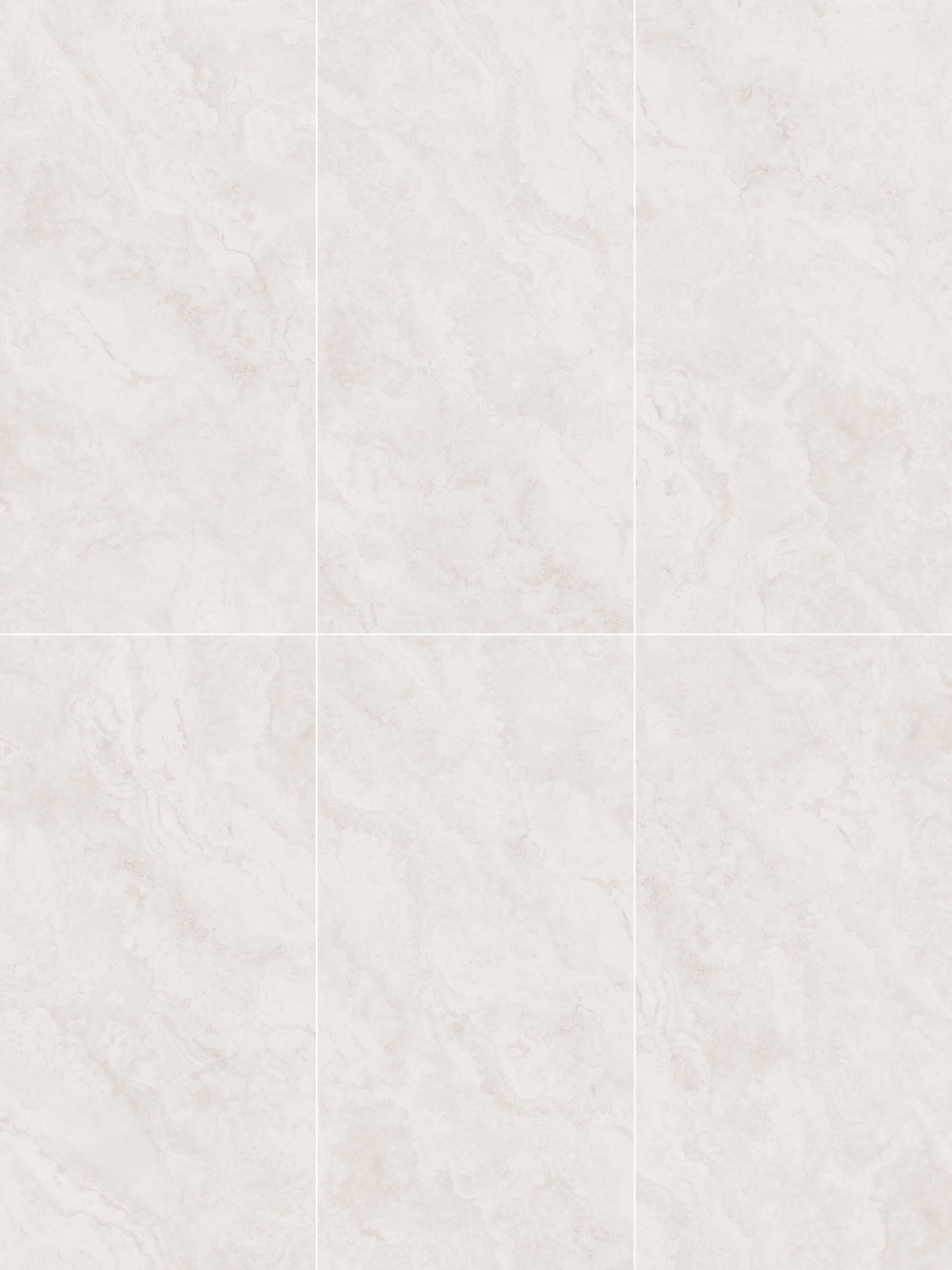
蒙泰罗-米灰
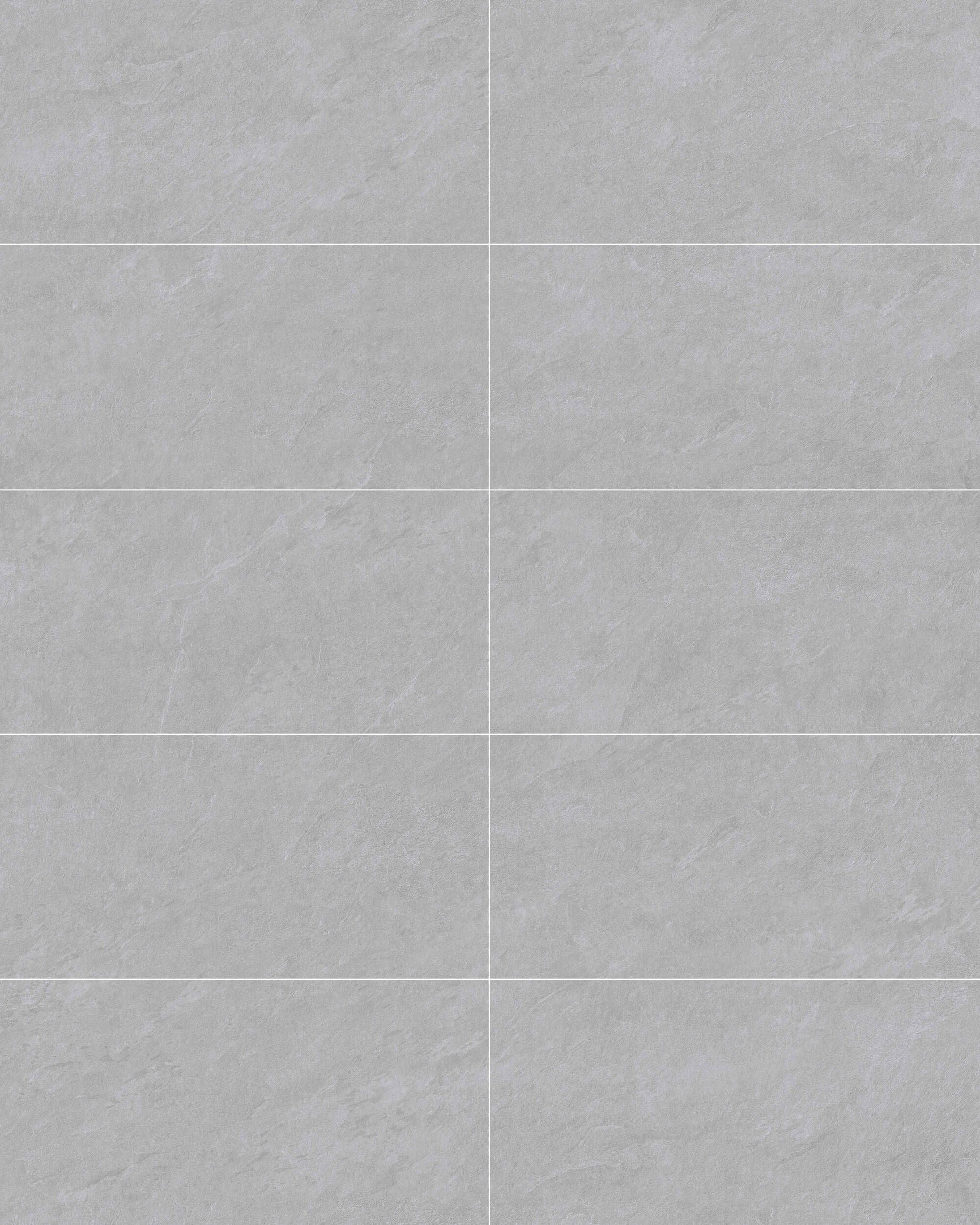
爱琴海礁岩
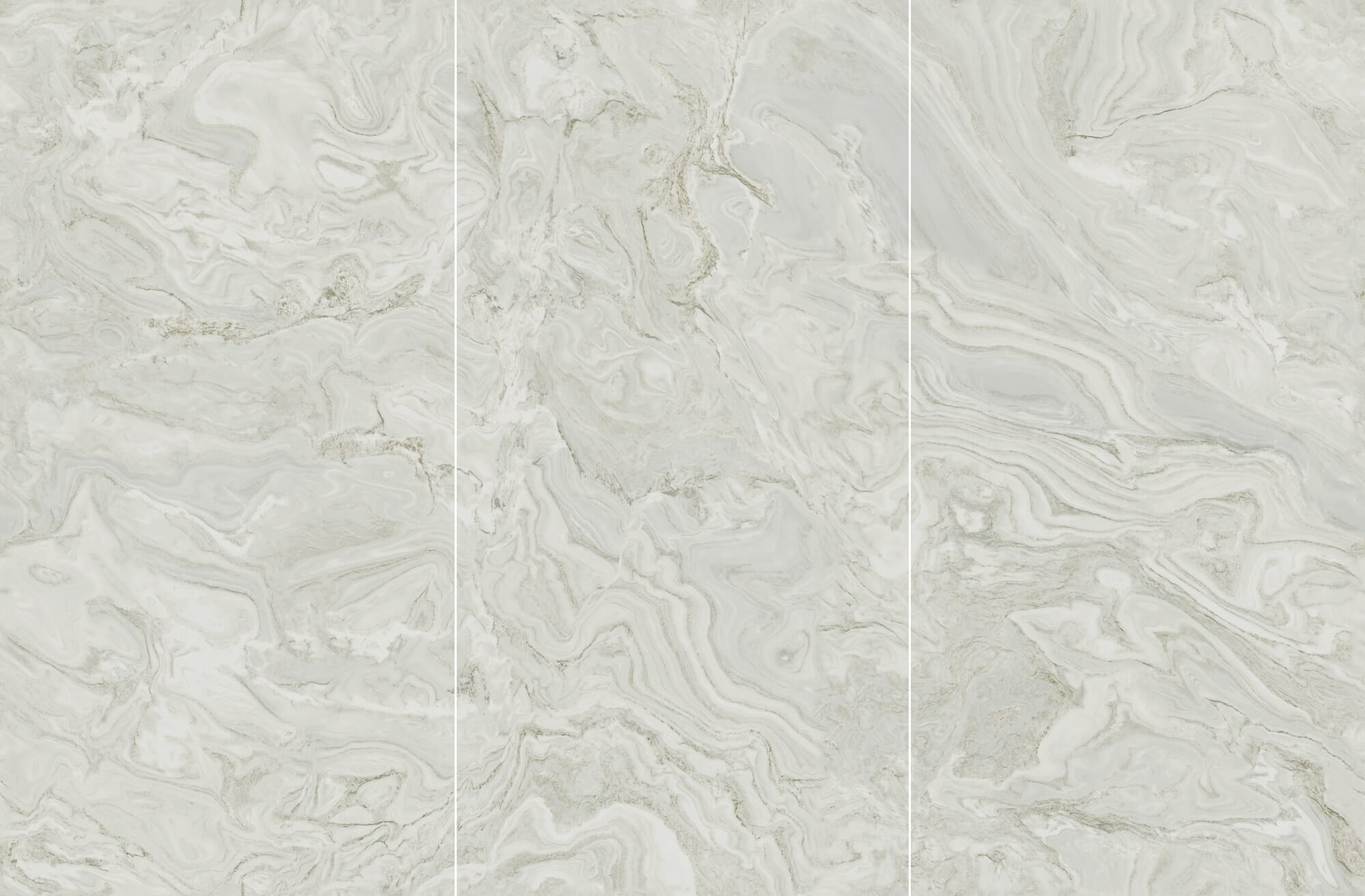
安第斯雪景
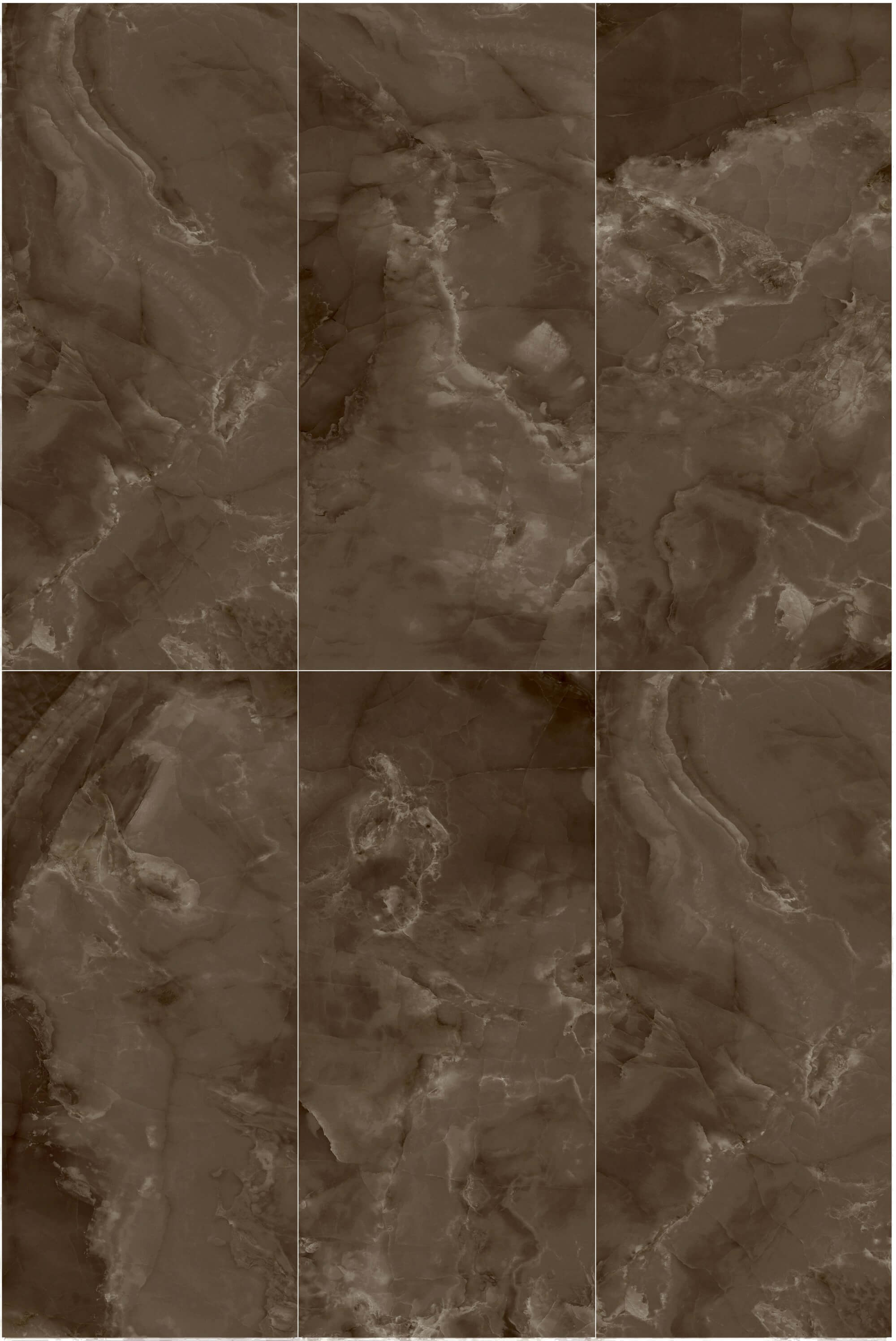
摩卡玉
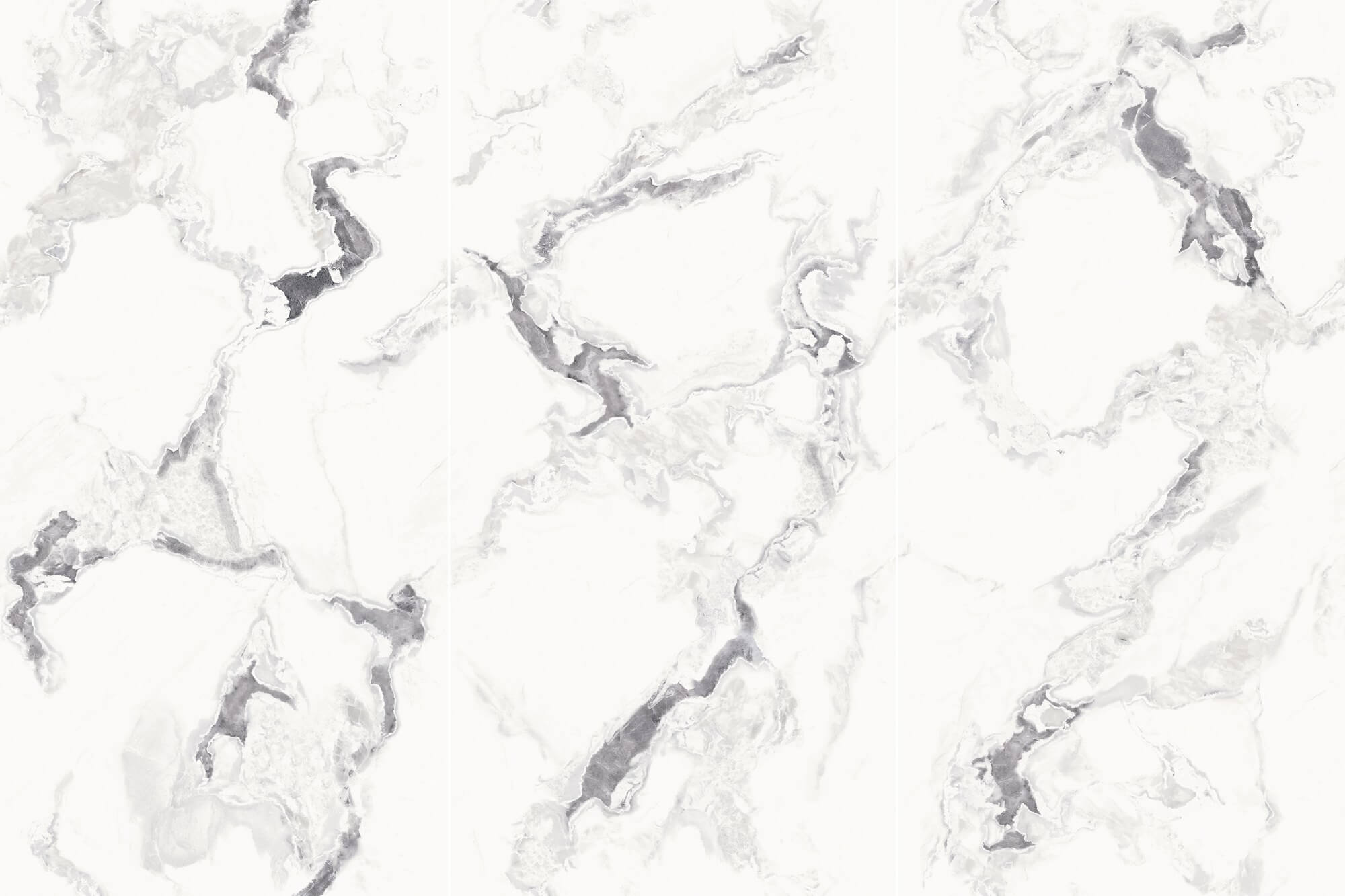
顶级芬迪白

雪花白
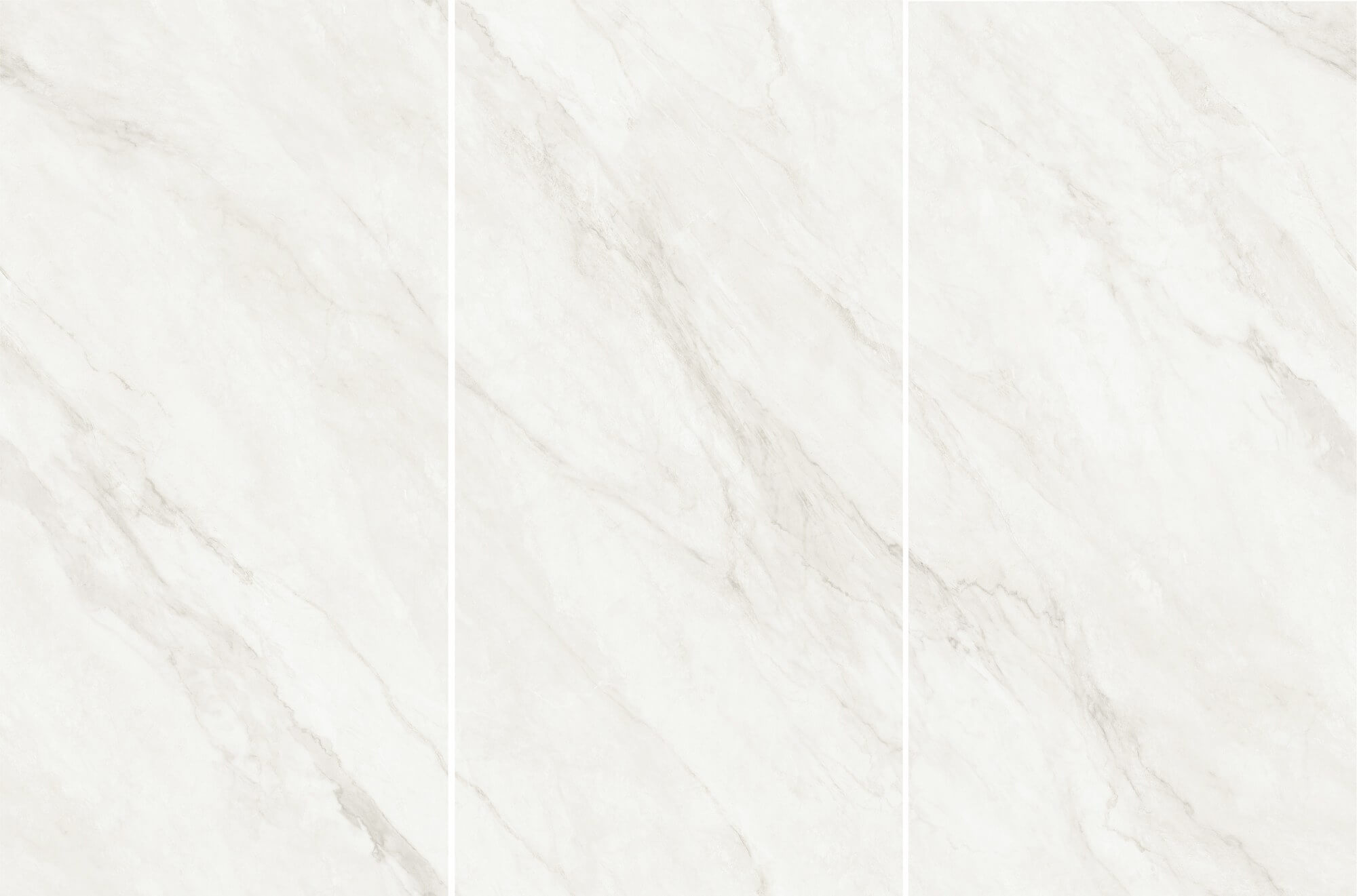
克莉丝
No matching products. Try another search or look.
MATERIAL EDIT
Marble-look tiles: compose the repeated field
Avoid accidental clusters of identical faces
A repeated diagonal or distinctive dark patch can become obvious when several matching faces sit together. Compare a proposed multi-piece layout and decide whether rotation is part of the design. Intentional variation can feel coherent without pretending every joint forms a continuous natural vein.
- Distribute distinctive faces through the area.
- Define allowed tile rotations on the laying reference.
Choose the joint as part of the marble effect
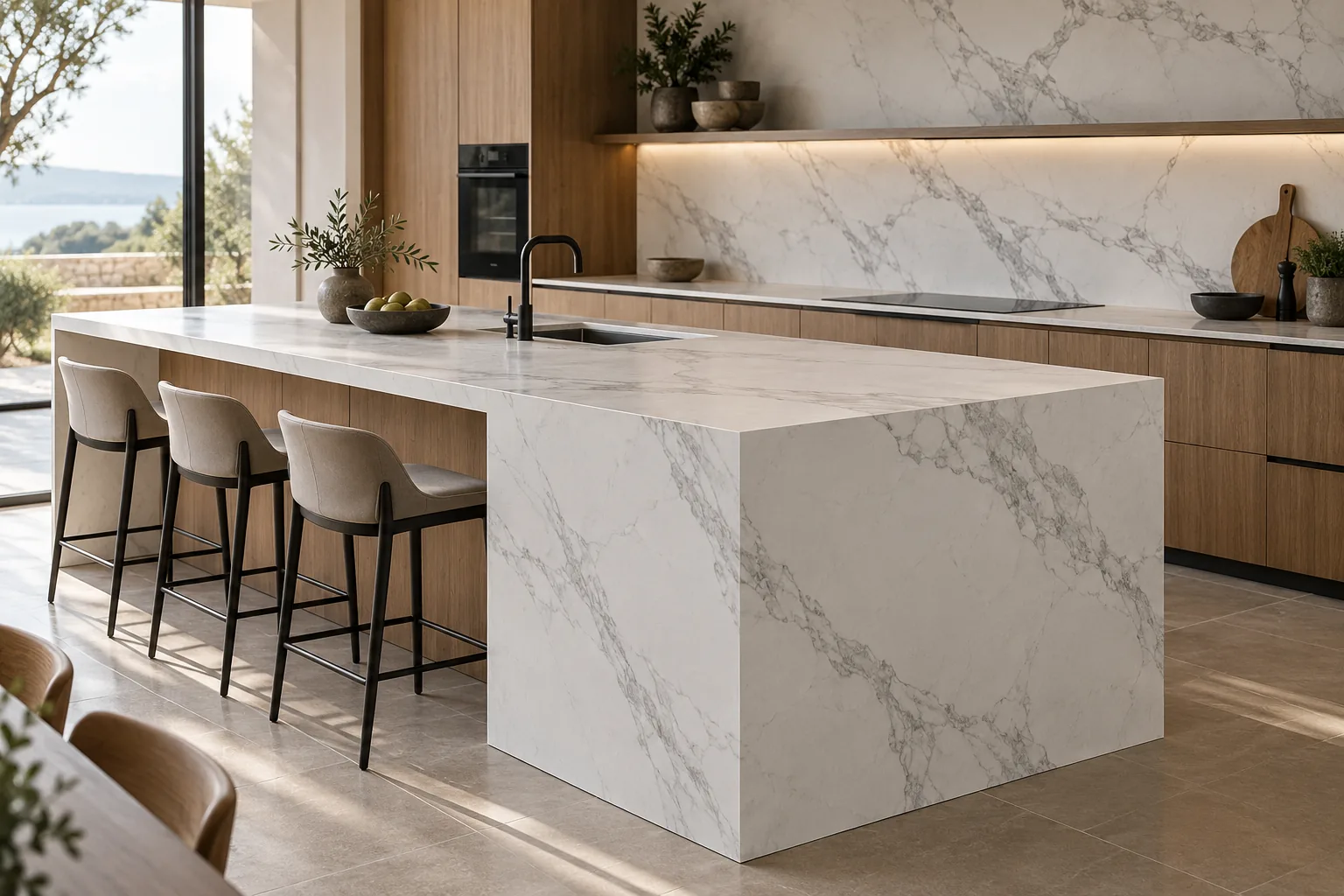
A close grout tone can soften the grid; a contrasting one makes the module more apparent. Compare both beside the actual tile under room lighting. Keep joint width, edge conditions and movement-joint requirements within the installer’s project review instead of choosing them solely from a rendered image.
- Test the grout colour in a small display.
- Show where the floor meets wall tiles or thresholds.
Use a showroom display that explains what the customer is seeing
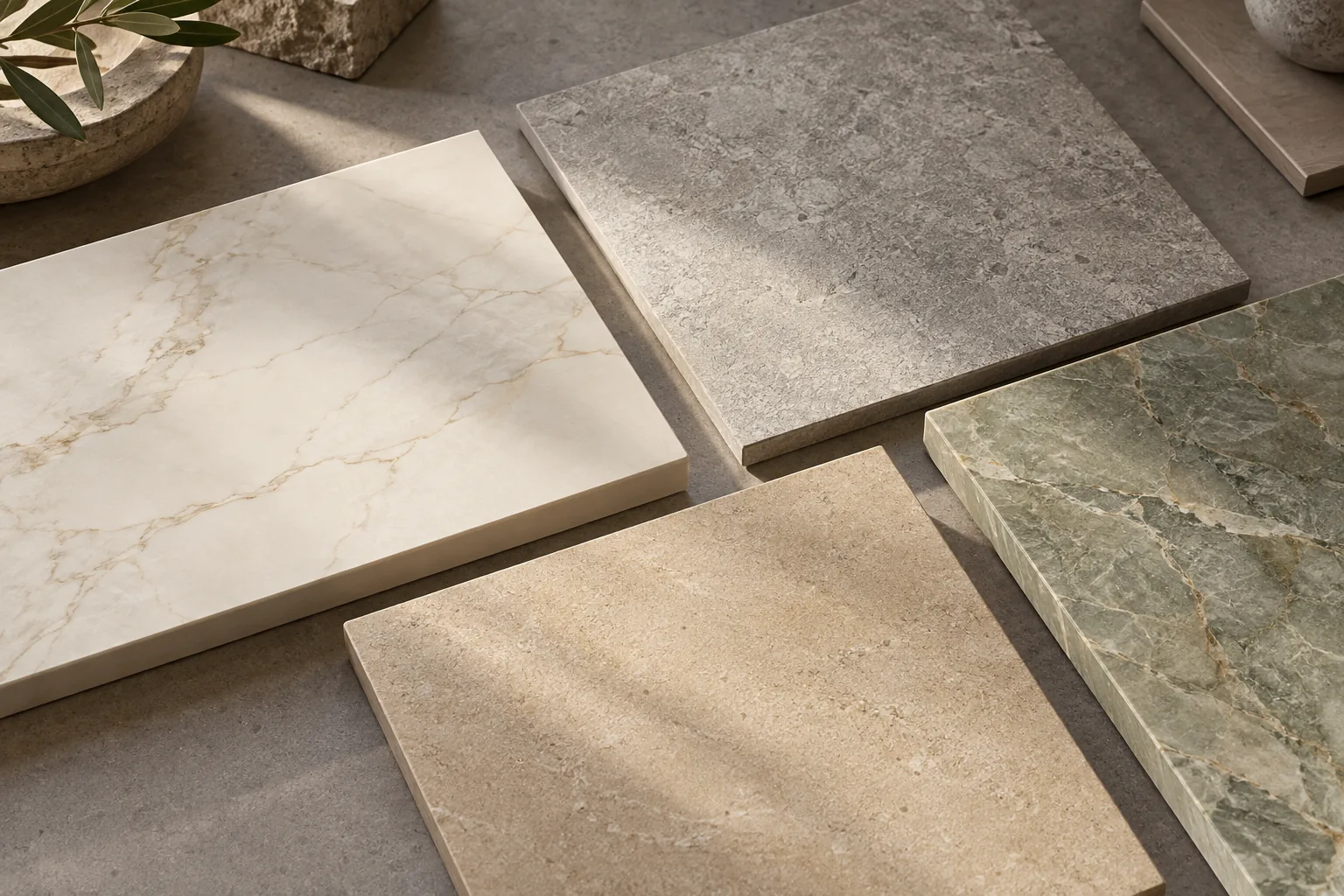
A marble-look display should distinguish the single-tile view from the arrangement of several faces. Place a model label beside the actual sample and show a small room layout nearby, identifying whether the arrangement is illustrative or follows a product-specific sequence. This avoids a customer assuming that the most attractive display corner will appear in every box. Include a quiet face as well as a more active one if both are part of the reviewed design. A clear display can explain the character of the collection without making the visitor read a technical manual, while leaving detailed face and supply questions to the selected model enquiry.
- Identify whether the display is a general example or a fixed sequence.
- Show representative quiet and active faces when reviewing the range.
MATERIAL EDIT
Marble-look tiles: compose the repeated field · Selection notes
| Decision | Review | Record |
|---|---|---|
| Repeated vein | Distribution of recognisable faces | Multi-piece plan |
| Rotation | Direction allowed in the field | Laying arrows |
| Grout tone | Quiet grid or visible module | Joint sample |
Marble look · Porcelain tiles
Questions buyers ask
Will veins continue across ordinary marble-look tiles?
Continuity requires a deliberately designed and selected sequence. General marble-look tiles may be intended for varied placement rather than connected veins.
Can a small room use a strong marble pattern?
It can, but review the actual room outline and how many full faces remain after cutting. A display board helps assess visual density before committing.
LET’S START A CONVERSATION
Your next project
starts with a surface.
Tell us what you are sourcing. We will help turn your requirements into a clear product enquiry.